Cost and insurance
Does Home Insurance Cover a Broken HVAC System?
Does home insurance cover HVAC? Usually only when a covered event, such as fire, lightning or a falling tree, damages the system. A furnace or AC that simply wears out is rarely paid for. This is general information, so check your own policy.
Published October 30, 2026 · Updated October 30, 2026 · By Kenan Perkins, Owner

- 4.6★ on Google29 reviews
- A+ BBB ratingNot BBB accredited
- Founded in 2010Repair-first advice
- Open 24 hoursCall any time
Does home insurance cover HVAC? Usually only when a covered event damages the system, such as fire, lightning, wind or a falling tree. A furnace or AC that wears out with age is rarely paid for. This page gives general information, not insurance or legal advice, so read your own policy and ask your agent.
Does home insurance cover a broken HVAC system?
It depends on why the system broke. Policygenius, in an April 2023 guide, says a homeowners policy can cover an AC unit damaged by lightning, fire or a power surge, and it will not pay for a new unit that stopped working through normal wear and tear. Your policy's wording controls, not any general rule.
Here is how the common causes tend to sort out, based on that guide:
| Cause of damage | How policies usually treat it |
|---|---|
| Fire, smoke, lightning | Commonly covered as a named peril |
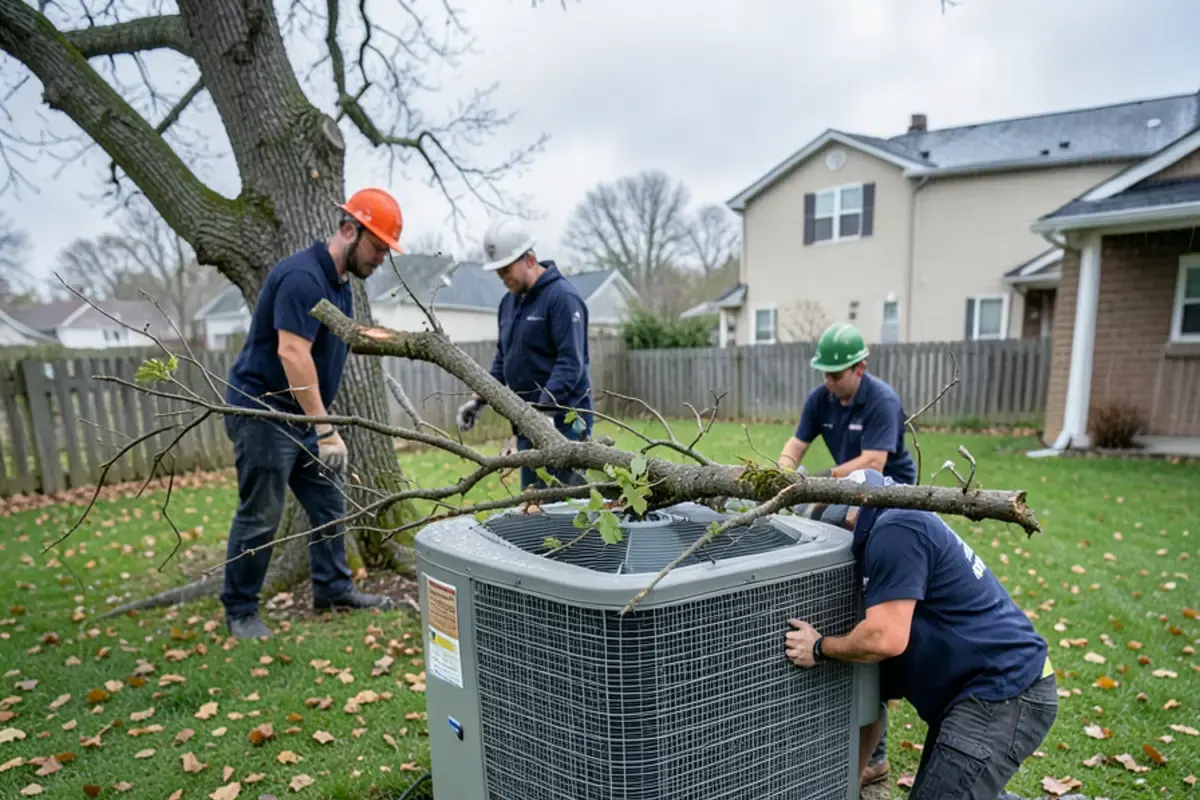
| Wind, fallen tree, hail | Commonly covered as a named peril |
| Theft or vandalism | Commonly covered as a named peril |
| Power surge | Often covered, but check the wording |
| Age, wear and tear | Not covered |
| Poor maintenance | Not covered |
| Mechanical breakdown | Not covered unless you add an endorsement |
| Flood or pests | Not covered |
Want a technician to take a look?
Call and tell us what the system is doing. You will get a clear, upfront quote before work starts.
- 4.6★ on Google29 reviews
- A+ BBB ratingNot BBB accredited
- Founded in 2010Repair-first advice
- Open 24 hoursCall any time
Why are age and wear and tear excluded?
Insurance responds to sudden events, not to the expected end of a machine's life. Contractor sources put furnaces and ACs at roughly 15 to 20 years with routine maintenance. A capacitor that fails in year 12, a blower motor that seizes or a rusted coil are ordinary wear, so a policy generally treats them as your cost.
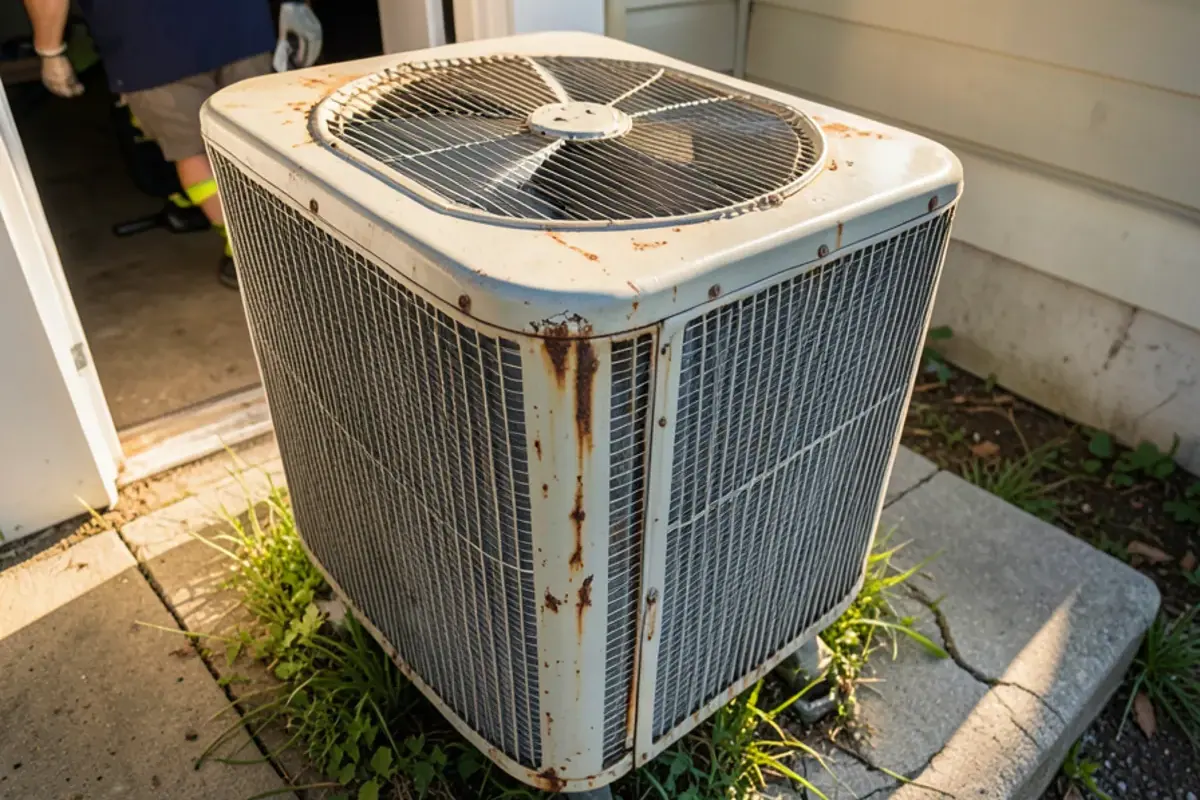
Missing maintenance is a second trap. If a filter was never changed and the coil froze, an insurer may call that neglect rather than an accident. Keeping service records and receipts helps you if a cause is ever disputed.
What about surges and frozen pipes?
Surges are a gray zone because the damage looks like age. A fried control board or a dead condenser after a storm can come from a surge or from a part that quit on its own. A technician can often see scorched traces or tripped protection, and that note supports your claim.
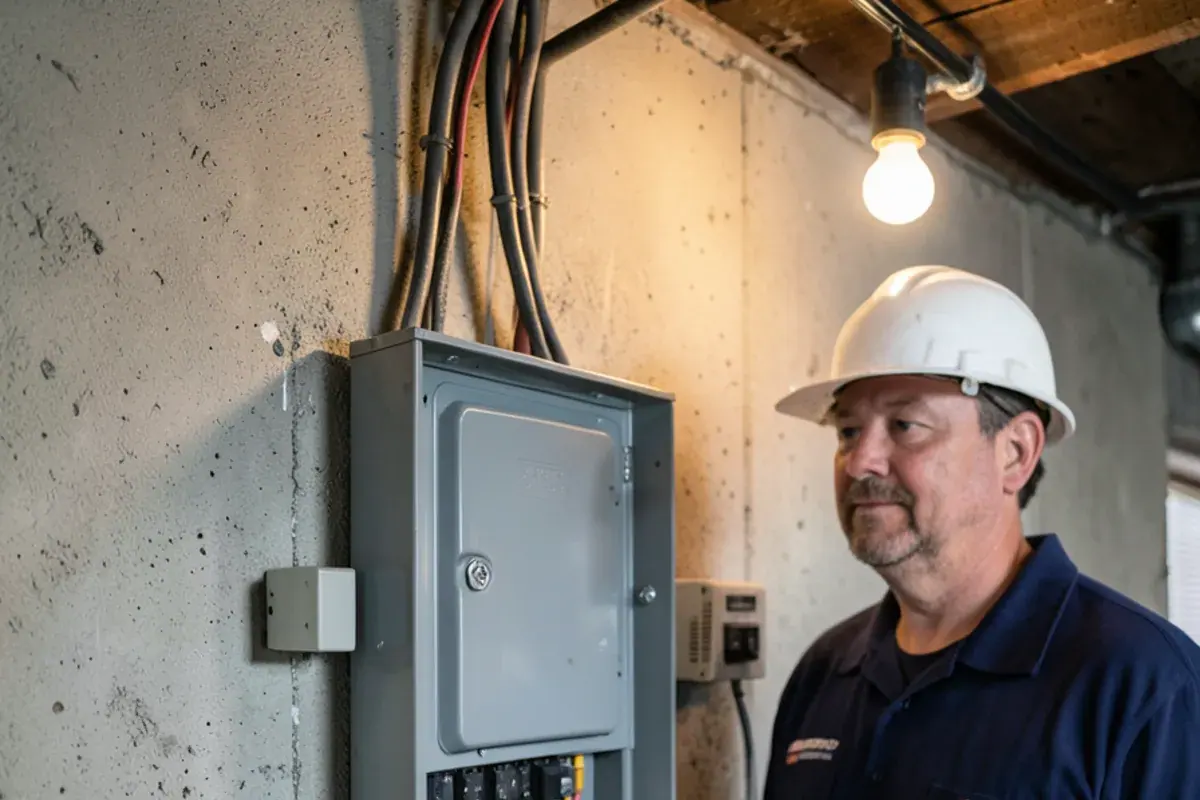
Winter adds a second question. If a furnace fails and pipes freeze, the broken furnace is your repair cost, while the water damage may fall under a different part of the policy. Some policies expect you to keep the home heated or drain the plumbing. Read the freeze language before the next cold snap.
What does a covered claim actually pay?
Even when the cause is covered, the check may be smaller than the invoice. Missouri's Department of Commerce and Insurance defines actual cash value as the cost to repair or replace the property at the time of loss, less depreciation, and notes that replacement cost value is not paid until the item is actually replaced. Your declarations page shows which one applies.
Here is a hypothetical to show the arithmetic. Lightning destroys a 14-year-old furnace and the replacement is priced at $7,133, the Angi 2026 St. Louis average for a full HVAC replacement. The depreciation and deductible figures below are invented for illustration, not typical rates.
| Policy basis | Replacement price | Depreciation (illustration) | Deductible (illustration) | Check |
|---|---|---|---|---|
| Actual cash value | $7,133 | 50%, or $3,567 | $1,000 | about $2,567 |
| Replacement cost, once installed | $7,133 | none | $1,000 | $6,133 |
The gap between those two lines is the reason to read the declarations page before a storm, not after. Our guide to furnace replacement cost shows what a replacement quote should list, so the invoice you send the insurer is itemized.
What should you ask your agent before you need a claim?
Put these questions to the agent or insurer in writing:
- Does my policy cover only named perils for the equipment, or open perils?
- How does the policy word power surge and electrical damage?
- Is there an equipment breakdown endorsement, and what does it exclude?
- Is the deductible a dollar amount or a percentage, and does a separate deductible apply to wind or hail?
- Is HVAC paid at actual cash value or replacement cost?
- Does the policy require maintenance records after a system fails?
Can you add coverage for breakdowns?
Yes, some insurers sell an optional equipment breakdown endorsement that covers mechanical and electrical failure. Policygenius notes it is an add-on and cites roughly $30 a year as an example, but pricing and terms differ by company. It carries its own limits, so read what it lists.
A home warranty is a different product. The FTC describes home warranties as service contracts that cost extra, and warns about hidden costs, such as per-visit fees, and limits on payouts. Its general advice is that if an item is not listed in a contract, assume it is not covered. Compare any plan with what you already have before paying.
What should you do after a failure you think is covered?
Act in this order:
- Photograph the equipment, the surroundings and any damage before anything is moved.
- Stop running the system if running it could cause more damage.
- Get a written diagnosis from a technician that says what failed and, if evident, why.
- Read the deductible against the repair estimate before you file.
- Call your agent or insurer and ask what they need.
What can a contractor honestly put in writing for a claim?
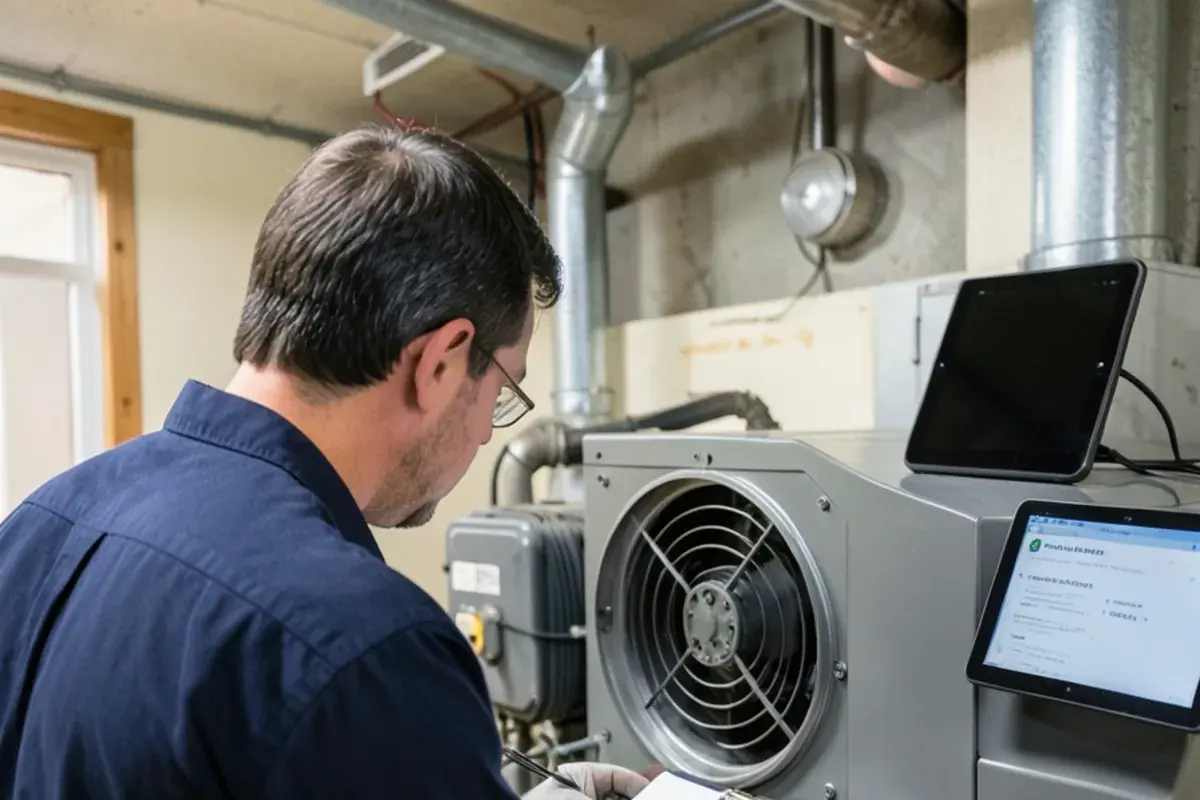
A technician can document what is observable: the failed part, the readings that show it failed, scorching on a board, bent fins or impact marks, and the date and conditions found. A technician cannot approve or predict coverage, and should not state a cause that the evidence does not show. A report that says only "unit is old" can sink a surge claim, while one that notes tripped protection and burn marks gives the adjuster something to evaluate. The honest trade-off is that many failures leave no trace of cause, and in those cases the note will say so.
Two habits protect a claim. Keep the failed part until the insurer says it can be discarded, because an adjuster may want to see it. And do not leave your household hot or cold while you wait. Most policies expect you to take reasonable steps to prevent further loss, so a documented temporary repair is usually safer than weeks without heat. Confirm that expectation in your own policy, because wording differs.
For a sense of what a repair invoice should look like, our AC repair cost guide lists the questions to ask before you approve one.
From the field: what a diagnosis can and cannot say
A technician's report describes the failed part and the likely cause. It does not decide coverage. A Google reviewer, Ms. O., described an air conditioner that was old, rusty and leaking water, with a house that no longer cooled. Age-related failure of that kind is what policies generally exclude.
Another reviewer, Margaret S., described a technician who looked at their AC and advised that the fan motor was going out, rather than repeating an earlier fix. A clear, specific diagnosis is useful whether or not an insurer ever sees it. If a storm or surge hit your system, say so to the technician and ask that the paperwork note the timing and the symptoms.
Get a written diagnosis first
Talk to a specialist at (321) 478-0693 if your AC or furnace has stopped and you are weighing a claim. We are open 24 hours, and we explain what failed in plain language and put a clear, upfront quote in writing. Read about AC repair or furnace replacement if you expect a bigger decision. Homes in Lemay are about 45 minutes from our base near Spanish Lake in normal traffic. Whether to file stays your call, made with your insurer.
About the author
Kenan Perkins
Owner of Kenan Corporation. Studied at Ranken Technical College. The company, founded in 2010, is built on repairing systems honestly rather than pressuring people into new ones. More about us.
Sources
- Policygenius, Does Homeowners Insurance Cover AC Units? (updated April 27, 2023)
- Federal Trade Commission, So what's the deal with home warranties? (February 2023)
- Missouri Department of Commerce and Insurance
- Missouri Department of Commerce and Insurance, Homeowners Insurance FAQs
- Angi, HVAC cost data for St. Louis (2026)
Insurance and HVAC: common questions
Does home insurance cover an AC damaged by a power surge?
Often it can, if your policy lists the surge as a covered cause. Policygenius lists power surges among commonly covered causes, but wording differs by insurer and some limit electrical damage. Ask your agent, document the damage, and keep the technician's written diagnosis showing the surge, not age, as the cause.
Is a home warranty the same as home insurance for HVAC?
No. The FTC calls home warranties service contracts, sold separately and costing extra, with limits and exclusions worth reading. Insurance responds to covered events like fire or storms. A warranty plan may pay for breakdowns from ordinary use, but only for what the contract lists.
Who decides whether my HVAC damage is covered?
Your insurer decides under the terms of your policy, usually after an adjuster reviews the claim. A contractor reports what failed and what caused it, if that is evident, but cannot approve a claim. If you disagree with a decision, the Missouri Department of Commerce and Insurance handles consumer questions about insurers.
Should I file a claim for a repair that costs a little over my deductible?
Probably not. Policygenius gives the example of a $1,000 deductible and a $1,100 repair, where paying out of pocket may be smarter than filing. Ask your agent how claims affect renewal in your case, then decide with the repair estimate in hand.
Talk to an HVAC specialist
Tell us what your system is doing and where you are. Open 24 hours.
Kenan Corporation, 927 Broadhead Lane, St. Louis, MO 63138. Open 24 hours.
- 4.6★ on Google29 reviews
- A+ BBB ratingNot BBB accredited
- Founded in 2010Repair-first advice
- Open 24 hoursCall any time