Indoor Air Quality
Duct Repair and Replacement in St. Louis, MO
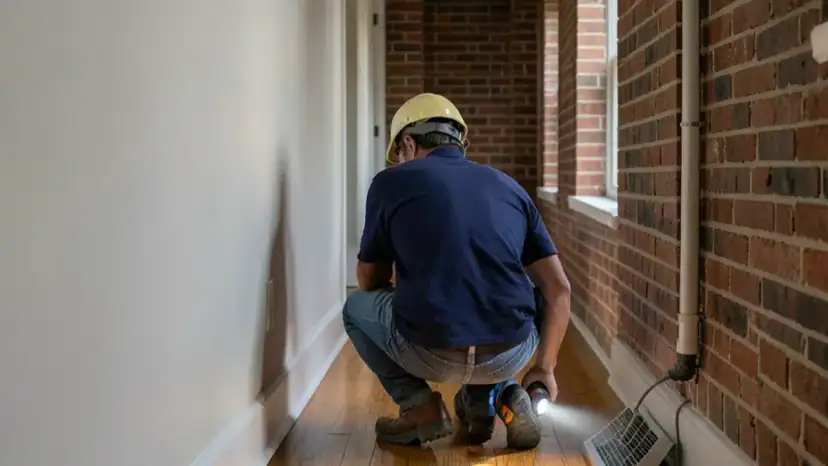
Duct repair and replacement in St. Louis starts by finding where conditioned air is escaping or getting blocked, because sealing a leak costs far less than rebuilding a system. Kenan Corporation inspects the runs, explains what it finds and quotes the work before starting.
- 4.6★ on Google29 reviews
- A+ BBB ratingNot BBB accredited
- Founded in 2010Repair-first advice
- Open 24 hoursCall any time
Leaky ducts waste conditioned air before it reaches a room, and sealing them is usually cheaper than replacing them. ENERGY STAR says about 20 to 30 percent of the air moving through a typical duct system is lost to leaks, holes and poorly connected ducts. Duct repair and replacement in St. Louis is mostly a choice between sealing, reconnecting and rebuilding the worst runs.
What are the signs of leaking or damaged ducts?
Look for comfort and cost clues, since most ducts are hidden. ENERGY STAR lists high summer and winter utility bills, rooms that are hard to heat or cool, and stuffy rooms that never feel comfortable. Other signs show up closer to the registers.
- One room stays hotter or colder than its neighbors
- Weak airflow from a register that used to blow strongly
- Whistling or rattling in the walls or at joints
- Dust streaks around registers or visible gaps at the boot
- Humidity or musty odors from a basement or crawl space run
- Flexible duct that is kinked, crushed or sagging
If the room problem is only upstairs, check airflow before blaming the air conditioner. Our AC repair page covers when the equipment is the cause.
What damages ductwork in older St. Louis homes?
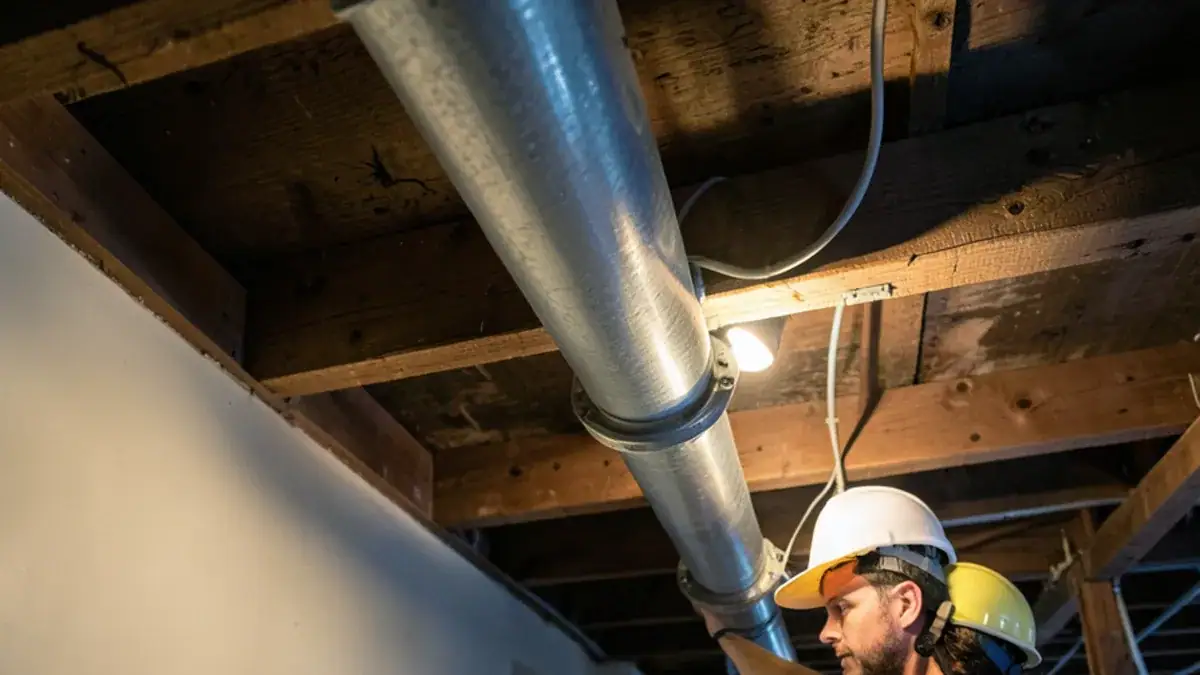
Time, past renovations and hidden routing do most of the damage. Many older houses have additions, finished basements and rerouted runs that were fitted around the structure rather than designed for the airflow. Common culprits:
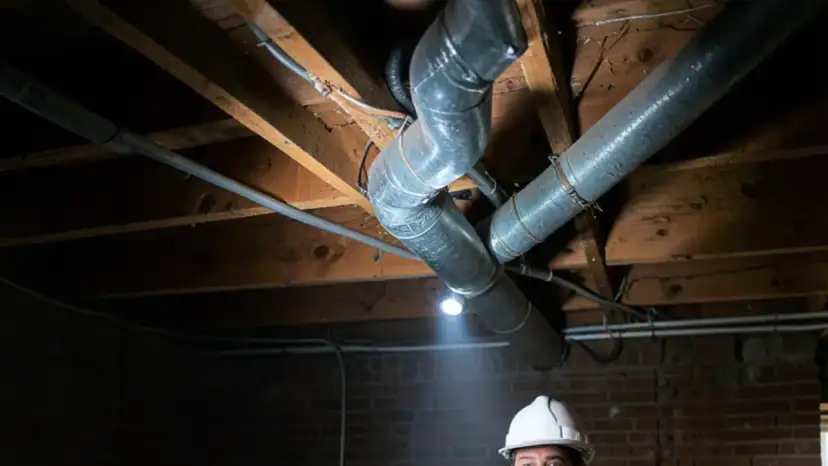
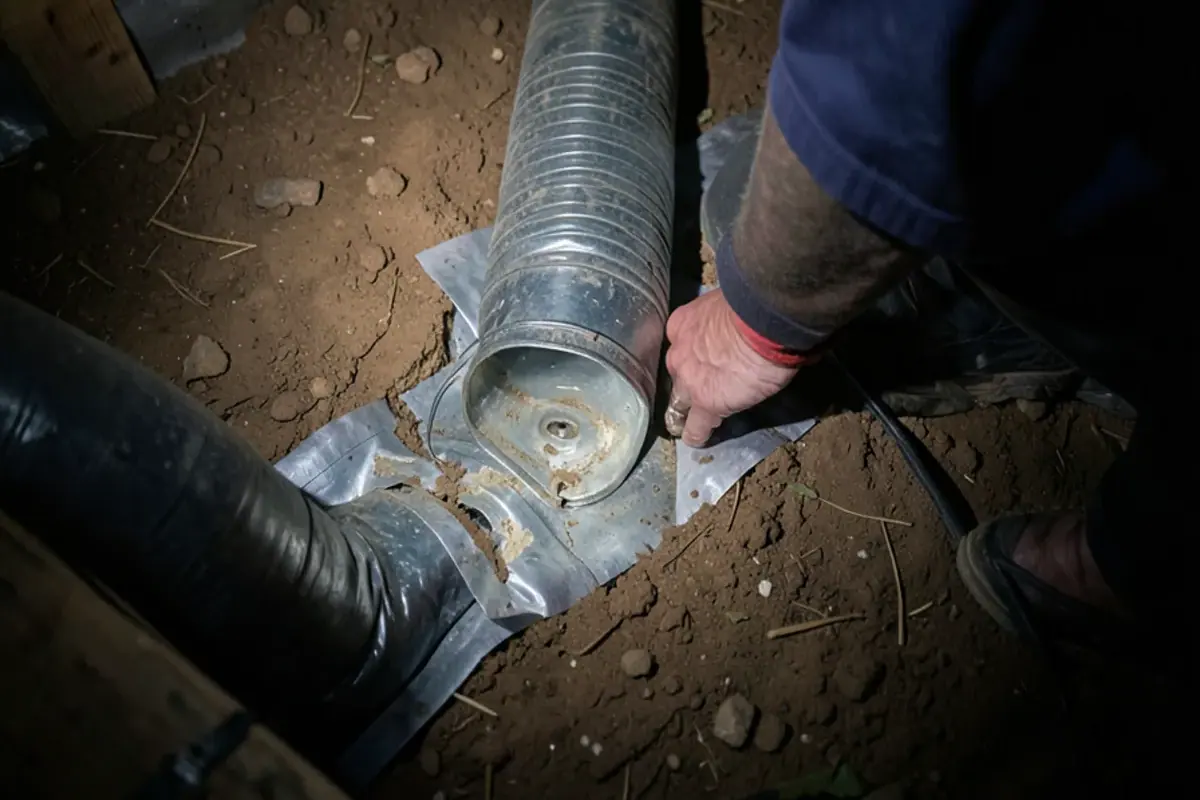
- Pulled connections. Joints in basements and crawl spaces loosen from vibration and temperature swings.
- Old tape. Cloth duct tape dries, cracks and peels over decades. ENERGY STAR says never to use duct tape because it is not long-lasting.
- Undersized returns. Rooms with doors closed and a single return starve the blower.
- Flex duct damage. Kinks, crushed sections and rodent chewing in attics and crawl spaces.
- Moisture. Condensation and leaks rust metal seams and soak insulation.
ENERGY STAR also warns that leaky ducts can draw dust and air from attics, crawl spaces and basements into the living space, and can add to humidity problems.
How ducts are inspected before anything is sealed
We inspect before we recommend, so a seal is not applied over a bigger problem.
- Walk-through. Every accessible trunk, branch, boot and return is looked at.
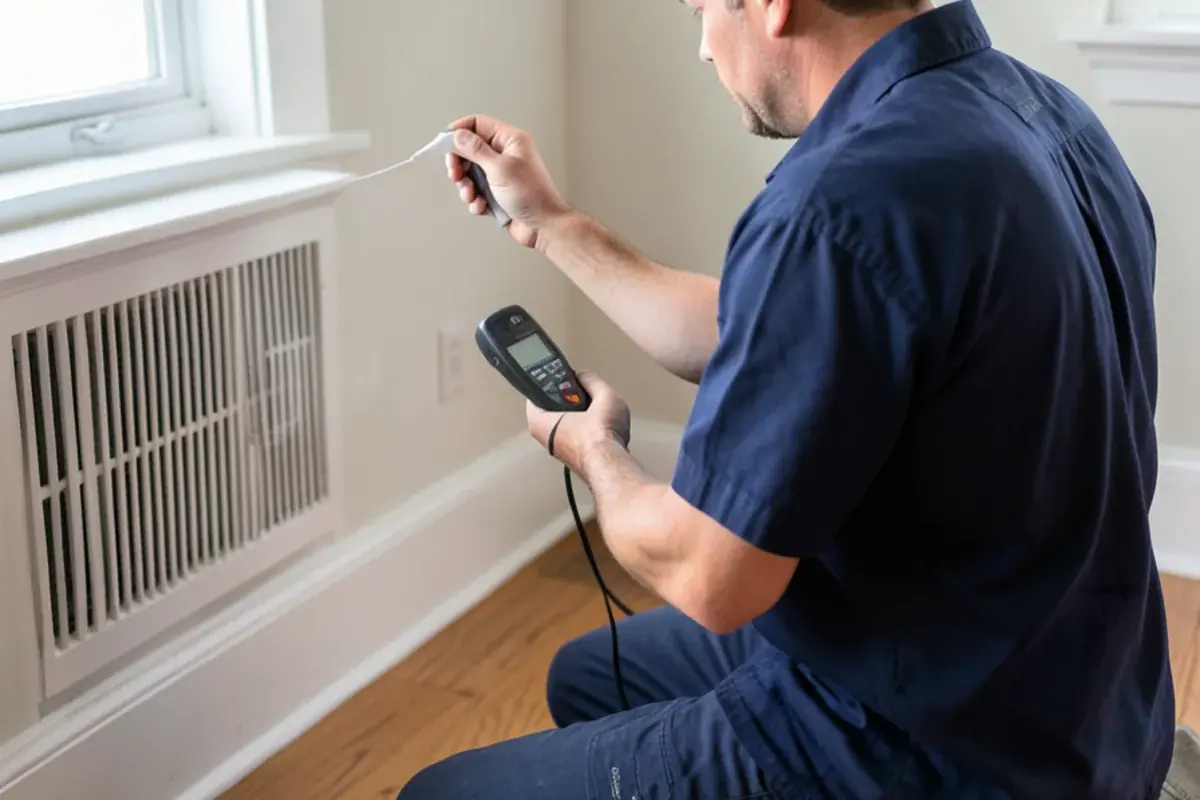
- Registers. Temperature and airflow are compared room to room.
- Equipment. The filter, blower and coil are checked, since a blocked coil also weakens airflow.
- Connections. Collars, joints, plenum seams and takeoffs are checked for gaps and failed sealant.
- Insulation. Runs in attics, crawl spaces and unfinished basements are checked for missing or damaged wrap.
- Safety. Ducts near combustion appliances get a close look at flue clearances.
You then get a plain-language explanation and a written list of options.
Seal, reconnect or replace: which fits?
The right fix is the least invasive one that restores airflow. Here is how the options compare.
| Option | Best for | Trade-off |
|---|---|---|
| Seal with mastic or metal tape | Leaky joints and seams on sound metal duct | Low cost, but cannot fix a crushed or undersized run |
| Reconnect and support | Pulled-off boots and sagging flex | Quick, but check for the cause of the movement |
| Replace a section | Rusted, crushed or chewed runs | Moderate cost, minimal disruption |
| Add or enlarge returns | Closed rooms and starved blowers | Needs wall or ceiling work |
| Full replacement | Widespread damage or a poorly designed system | Highest cost, and usually the best long-term fix |
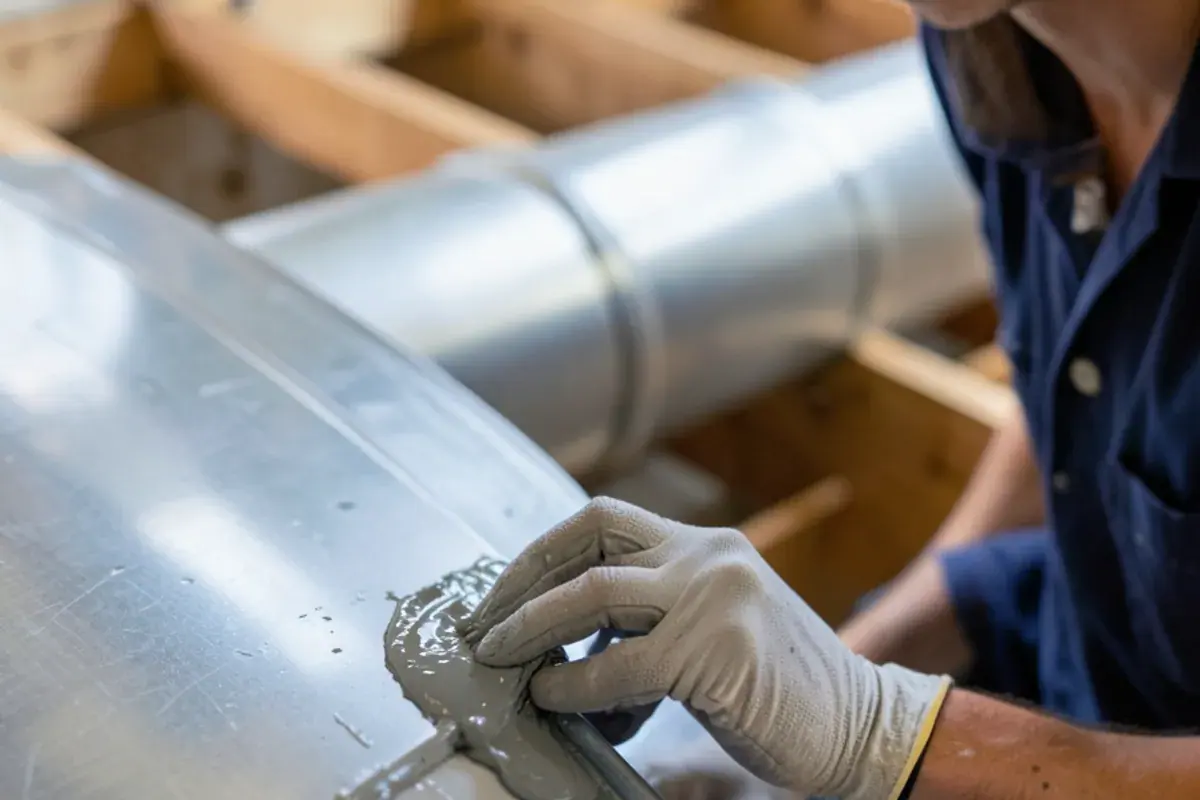
Insulation matters as much as sealing. ENERGY STAR recommends sealing leaks with mastic or metal tape and insulating accessible ducts in attics, crawl spaces, unfinished basements and garages. If your ducts are fine and the problem is dust, air duct cleaning is a separate question, and often not the answer.
Need help with Duct Repair and Replacement?
Call and tell us what the system is doing. You will get a clear, upfront quote before work starts.
- 4.6★ on Google29 reviews
- A+ BBB ratingNot BBB accredited
- Founded in 2010Repair-first advice
- Open 24 hoursCall any time
What does a duct repair visit look like?
The visit is built so you see the problem before you pay to fix it.
- You describe the room, the season and what changed.
- We walk the duct system and take readings at registers.
- We show you the leaks, disconnects or damage we find.
- You get a clear, upfront quote with each run listed as seal, repair or replace.
- On approval, the repairs are made. Seams are sealed with mastic or metal tape, not cloth tape.
- We re-check airflow at the registers and confirm the equipment is working.
Small sealing and reconnection jobs can often finish in a visit. Section replacements and full duct systems take longer, and your quote should give days and what rooms are affected. Expect the biggest change in the problem rooms, with quieter registers and steadier temperatures.
What a duct repair job covers
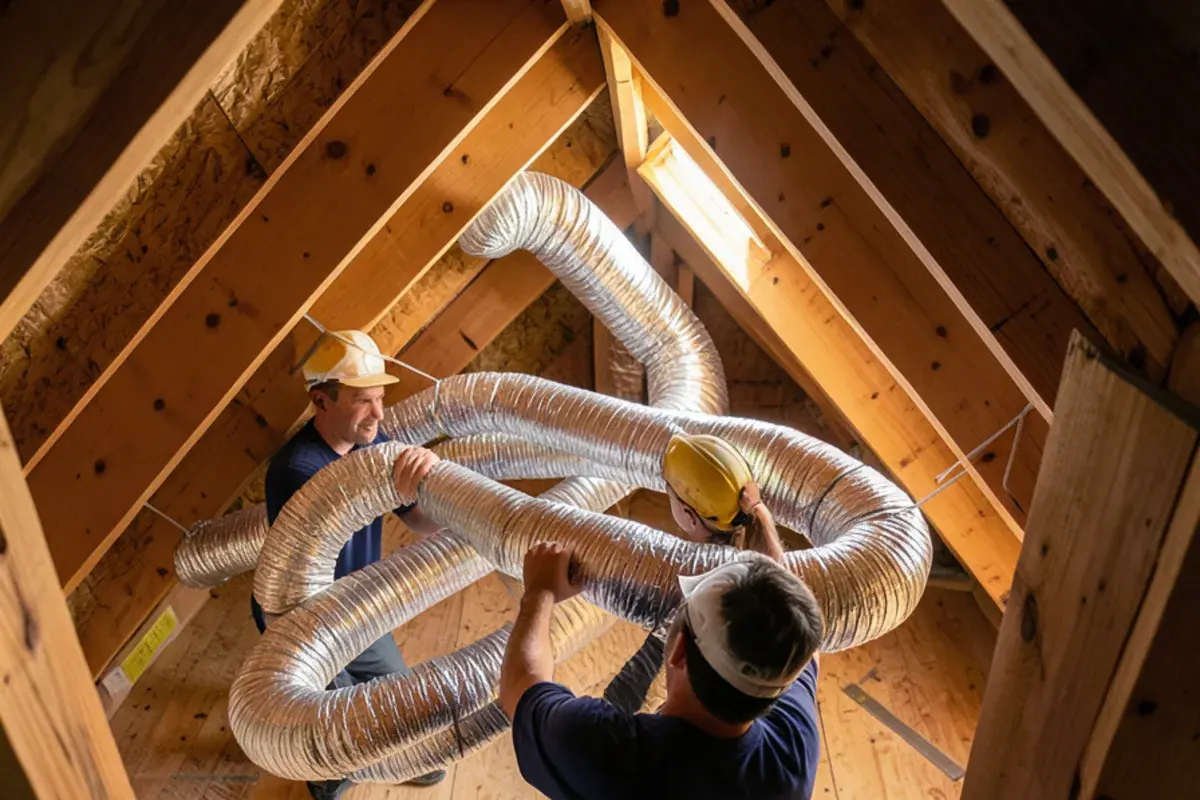
- Inspection of every reachable run, joint and boot
- Reconnecting separated runs and replacing crushed sections
- Sealing joints with mastic or foil tape rated for ducts
- Insulating runs in attics, crawl spaces and garages
- An airflow check at the registers after the work
What does duct repair or replacement cost in St. Louis?
Cost depends on how much duct is involved and how hard it is to reach. Fixr reports replacement of existing ductwork at about $1,856 to $17,149 for a typical 2,500 square foot home with about 275 linear feet of duct (August 2025). Per linear foot, it lists $21.38 to $62.36 for galvanized sheet metal and $6.75 to $34.19 for insulated flexible duct. Angi puts hourly HVAC labor in St. Louis at $75 to $150 for 2026. These are national and market figures, not our quote.
What moves the number:
- Linear feet, run diameters and the number of returns
- Material: sheet metal, spiral or flexible duct
- Access through attic, crawl space, basement or finished walls
- Insulation, wall or ceiling repair afterward
- Removing damaged or contaminated insulation
St. Louis County requires a permit to install, alter, repair or replace heating, air-conditioning or duct systems. Ask who applies, and get the answer in the written quote.
Who licenses the contractor, and where do rules differ?
The county also requires mechanical work to be done by a contractor holding a St. Louis County mechanical license, and its Mechanical Licensing Clerk at (314) 615-7096 can confirm one. Sealing an accessible joint yourself is not the same as rebuilding a trunk, so ask the permit office where a repair becomes an alteration.
Inside the City of St. Louis, Ordinance 70800 requires a City-licensed mechanical contractor and a permit for replacement heating and cooling units. Ask the Mechanical Section at 314-622-3313 how it treats ducts. Cities in the county differ: Clayton's building services page says its mechanical permit covers replacement ductwork. Ask any contractor, including us, for the license number your address requires, and have the quote name who pulls the permit.
Why Kenan Corporation for ductwork that actually delivers air
On Google, customers rate Kenan Corporation 4.6★ across 29 reviews, checked October 2026.
- Check what else is working. Monty M. wrote that after the repair the technician "checked to see if everything else was working properly." The same discipline applies to a duct system.
- Options, not one answer. We list seal, repair and replace for each run, with prices.
- Repair before replacement. Kenan Bruce Martz founded the company in 2010, after 20-plus years in St. Louis area HVAC, because he disliked commission-driven pitches.
- Open 24 hours. Call any time.
Ask any contractor for the license number your city or county issues, since Missouri has no statewide HVAC license. We cover Lemay and Shrewsbury at about 45 minutes and Affton at about 50 minutes from our base near Spanish Lake in normal traffic.
Where we repair ducts
Drive times are from our base near Spanish Lake in normal traffic.
- Spanish Lake: about 5 minutes away, and mid-century homes here can have aging ducts that leak into crawl spaces and basements.
- Jennings: a 1990s furnace on 1950s ducts is a common pairing, so we check the old runs before blaming new equipment.
- Lemay: many ranches had a cooling coil tied into ducts meant for heat alone, so warm far rooms often point to airflow.
- Affton: some ranches run ducts through a crawl space, and a furnace replacement is the moment to check duct size.
- Mehlville: with a median home from 1969, the ducts are decades old, and the county permits altering or replacing them.
- Shrewsbury: condos and townhomes from the 1980s and 1990s often have short runs, which makes a weak room quicker to trace.
- Richmond Heights: homes updated one piece at a time often pair a newer condenser with an undersized duct run.
- Clayton: the city's own permit portal covers replacement ductwork, so the permit path differs from county-run neighbors.
- Oakville: 1970s split-levels on second or third systems make fixing the ducts first a real option.
How do you keep ducts in good shape after the work?
Keep the filter changed, registers uncovered and access areas dry. Check exposed joints and boots each fall. If you find a loose joint later, seal it with mastic or metal tape, never cloth tape. If a room still runs hot or cold, tell us. A return or balance adjustment is often the remaining fix.

Duct Repair and Replacement: common questions
How do I know if my ducts are leaking?
Common signs are rooms that never reach the thermostat setting, high summer and winter bills, dust that returns quickly and whistling at joints. ENERGY STAR says about 20 to 30 percent of air in a typical duct system is lost to leaks, holes and poor connections. A technician can confirm with a visual inspection and airflow readings.
Can I seal ducts myself with duct tape?
Not with duct tape. ENERGY STAR says never use it, because it does not last, and recommends mastic sealant or metal tape. You can seal accessible joints in a basement yourself. Ducts near a furnace flue, behind walls or in an attic are better left to a contractor.
When is it better to replace ducts than to seal them?
Replace when sections are crushed, rusted through, collapsed, wet or insulated with damaged material, or when a room never gets enough air no matter how well the leaks are sealed. A short, sealed, undersized run still starves the room. Your quote should say which runs are repaired and which are rebuilt.
Does duct work need a permit in St. Louis County?
Usually yes. St. Louis County requires a permit to install, alter, repair or replace heating, air-conditioning or duct systems. Ask the contractor whether your job needs one and who applies, and put the answer in the written quote. City and municipal rules vary, so check with your local building office.
Will new ductwork make my house quieter?
It can. ENERGY STAR notes that noise can indicate an undersized duct system, and whistling at registers often signals too little duct area for the air moving through it. Sizing the runs and returns correctly usually helps both noise and comfort, though equipment noise is a separate issue.
Can you come same day for a duct problem?
We offer same-day service when the schedule allows, and we are open 24 hours, so call and describe the room or symptom. For a disconnected duct or a no-air complaint, mention it first. Larger replacements are planned visits, and the quote will say how many days to expect.
Talk to an air quality specialist
Tell us what your system is doing and where you are. Open 24 hours.
Kenan Corporation, 927 Broadhead Lane, St. Louis, MO 63138. Open 24 hours.
- 4.6★ on Google29 reviews
- A+ BBB ratingNot BBB accredited
- Founded in 2010Repair-first advice
- Open 24 hoursCall any time
What customers say on Google
4.6★ from 29 Google reviews, checked October 2026.
Kenna did an amazing job! I had another company come out and told me I needed a new furnace because my heat was not coming on. Previous company said could be the motor/fan and that would cost $650, which I was ok with. They didn’t check any parts, but was ready to say I should just get a new heating and cooling unit. I knew my neighbor had service done by Kenyan and said he did a great job. He came out and found it was a capacitor that was causing the issue and fixed it. He is awesome and definitely if I need help again, he will be called and I will use his services!
We placed an emergency call to Kenan and within 12 hrs he arrived, prepared and ready to go. Extremely courteous and pleasant. Knew exactly what the issue was, replaced the item and checked to see if everything else was working properly. Great job, very competitive pricing and best of all great communicator before, during and after the job. Well done sir! We’ll definitely be call you in the future.
My A/C had been out for a while and I woke up at 1am to a 90degree house. Kenan Corporation was at my house within 12 hours and my house is back to a comfortable temperature. He was so kind even with my curious dog with a big bark. Would definitely recommend.