Problem solving
Furnace Blowing Cold Air: Causes and Fixes
A furnace blowing cold air usually has a thermostat set to fan on, a dirty filter, a tripped limit switch or an ignition fault. Start with the two checks you can do safely, and call a technician if the burners will not stay lit.
Published October 30, 2026 · Updated October 30, 2026 · By Kenan Perkins, Owner
- 4.6★ on Google29 reviews
- A+ BBB ratingNot BBB accredited
- Founded in 2010Repair-first advice
- Open 24 hoursCall any time
A furnace blowing cold air is usually telling you the blower is running while the burners are not. Most causes fall into four groups: a thermostat setting, restricted airflow, a safety shutdown or an ignition fault. Work through them in that order, and stop at anything that involves gas.
What should you check first when the furnace blows cold?
Check the thermostat before you touch the furnace. It takes less than a minute and solves more calls than you would expect.
- Set the mode to Heat, not Cool or Off.
- Set the fan to Auto. On On, the blower runs between heat cycles and pushes room-temperature air that feels cold on your hand.
- Raise the setpoint a few degrees above room temperature and wait five minutes.
- Replace weak batteries if the screen looks dim.
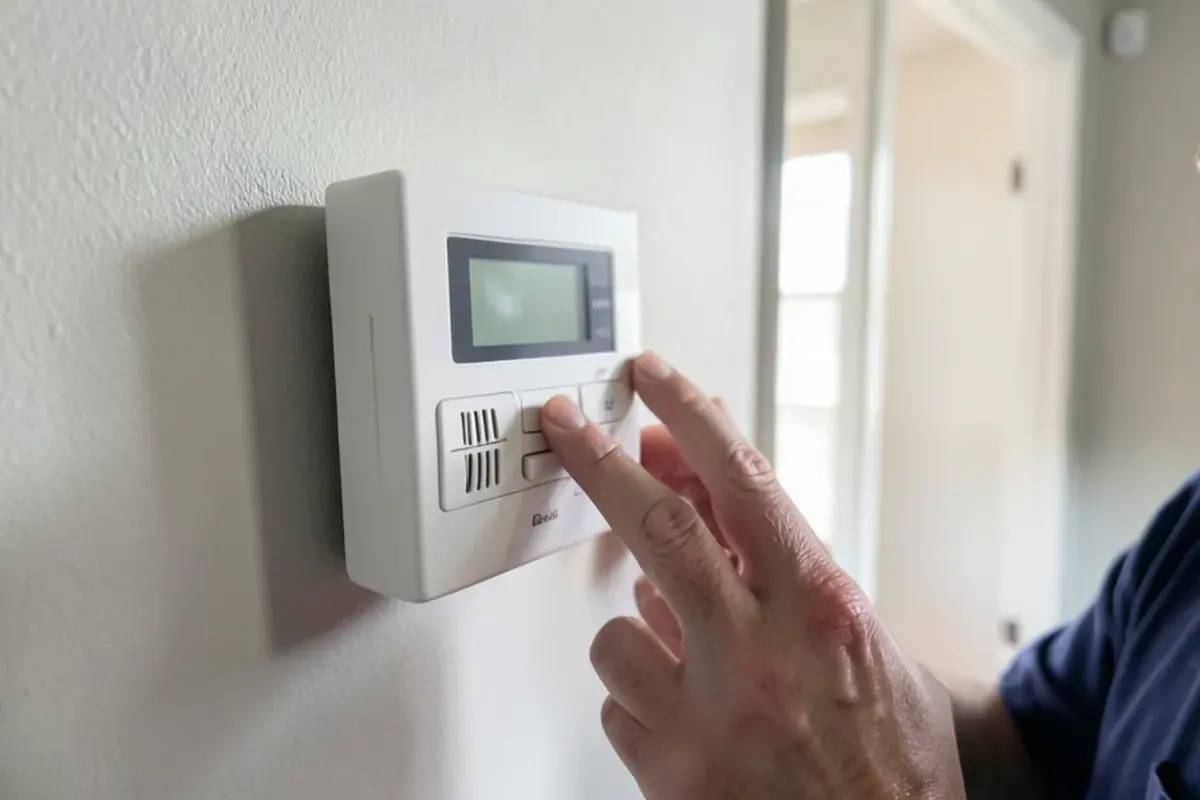
If the air is still cold after five minutes, go to the filter.
Want a technician to take a look?
Call and tell us what the system is doing. You will get a clear, upfront quote before work starts.
- 4.6★ on Google29 reviews
- A+ BBB ratingNot BBB accredited
- Founded in 2010Repair-first advice
- Open 24 hoursCall any time
Why a dirty filter makes a furnace blow cold air
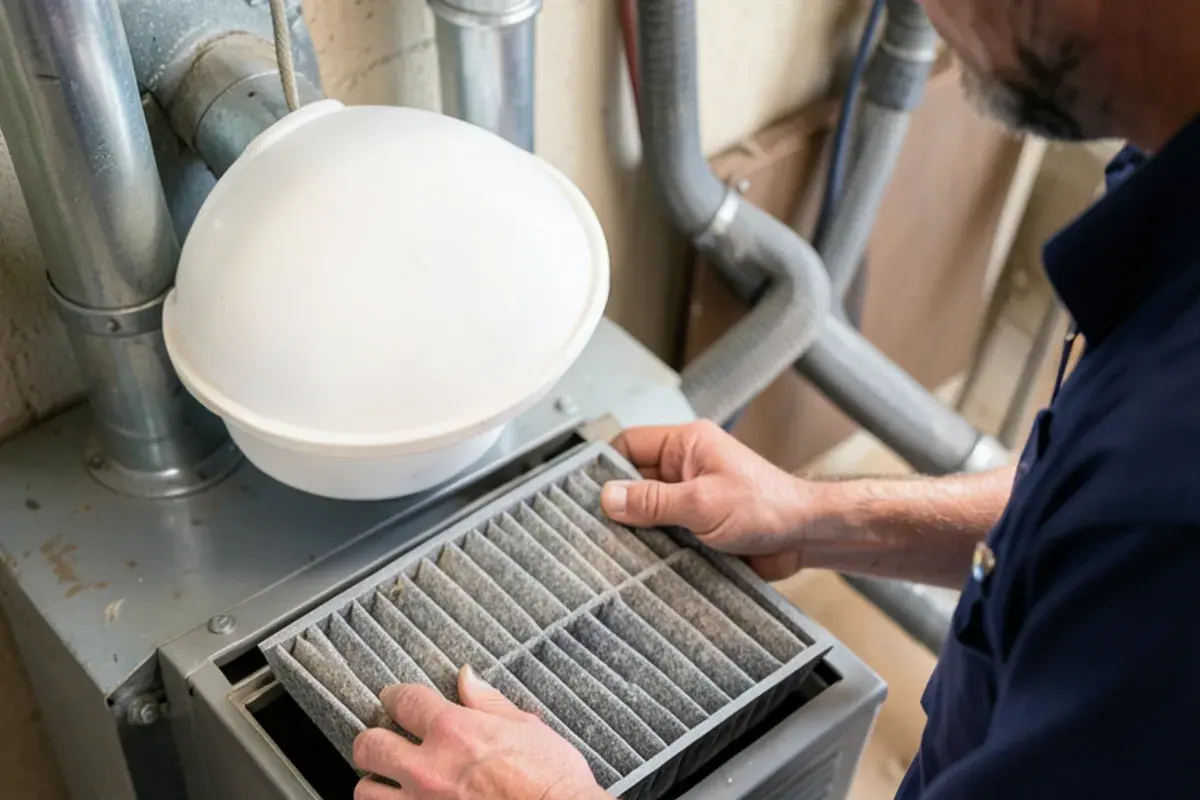
A clogged filter starves the heat exchanger of airflow, the exchanger overheats, and the limit switch shuts off the burners while the blower keeps running to cool it down. From the register, that feels like the furnace gave up midway through a cycle.
Pull the filter and hold it up to a light. If you cannot see through it, replace it, then give the furnace a few minutes. Our filter guide covers how often to change one in a St. Louis home.
Ignition and flame sensor faults
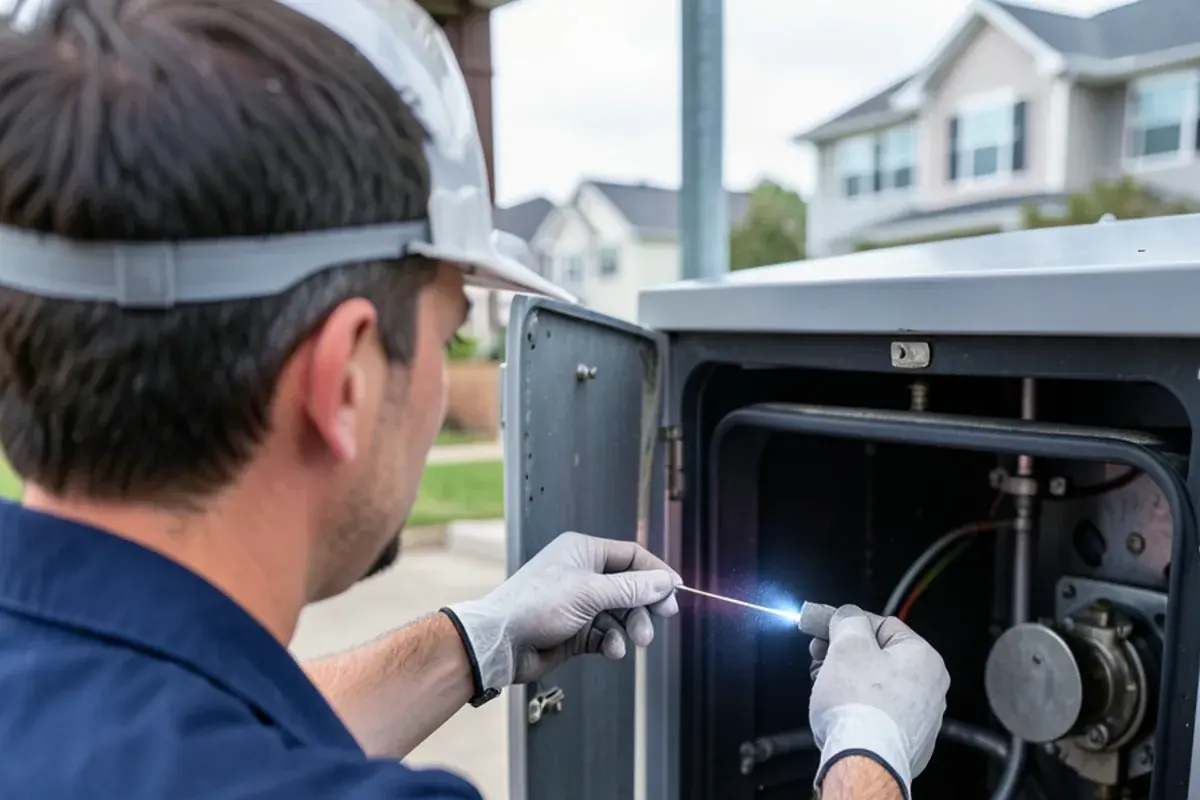
Ignition faults are the most common repair behind this symptom. A modern furnace proves its flame before it stays lit, and it shuts the gas off within seconds if it cannot.
| Part | What you notice | Fix |
|---|---|---|
| Flame sensor | Burners light, then cut out after a few seconds | Clean or replace the sensor |
| Hot surface igniter | Clicking or humming, no flame | Replace the igniter |
| Pilot assembly (older units) | Pilot out or will not hold | Clean or replace the thermocouple |
| Gas valve | No gas reaches the burners | Technician test and replacement |
These parts sit in the burner compartment, next to the gas supply. They are technician work. Older furnaces in brick homes around Maplewood may still use a standing pilot, which fails differently than a newer igniter.
When is a furnace blowing cold air a sign of something bigger?
Sometimes the shutdown is the furnace protecting you. A cracked heat exchanger, a blocked flue or a failed draft inducer can all stop the burners. Ductwork can fake the symptom too, because a disconnected return in a crawl space or attic pulls in unheated air.
Three signs mean you should stop and call:
- A flashing fault code that returns after one reset
- Soot, scorch marks or a burning smell near the furnace
- A carbon monoxide alarm, which means everyone goes outside first
If you smell gas, leave the house, then call 911 or Spire's St. Louis line at 800-887-4173 from outside. Spire does not charge to investigate a gas smell.
How do you tell a blower problem from a burner problem?
Watch the furnace through one full cycle. It takes a few minutes and tells a technician most of what they need.
- Set the thermostat 5 degrees above room temperature.
- Listen for the inducer motor, a small fan that starts first.
- Look through the sight glass for an igniter glow or a blue flame.
- Note how long the flame stays lit before it drops out.
- Feel a nearby register once the main blower starts.
If the flame stays on and the air is still cool, the trouble is likely airflow or ductwork. If the flame lights and quits within seconds, the flame sensor moves to the top of the list. If nothing lights and a light on the control board blinks, count the blinks and compare them to the chart inside the panel door.
Write down what you saw and the model number on the data plate. A clear description shortens the diagnosis, and it lets you compare any quote you get against what the furnace was actually doing.
What the timing of the cold air tells you
The moment the air turns cold narrows the cause before anyone opens a panel.
| What you see | Likely cause | Next step |
|---|---|---|
| Warm air at the furnace, cold air in far rooms | Leaking or disconnected duct run in a crawl space or attic | Technician inspects the ducts |
| Cool air at the end of a cycle, after the burners stop | Normal: the blower runs on to move the last of the heat | Nothing to fix |
| Burners light, then quit within seconds | Coated or failing flame sensor | Technician |
| Heat for a few minutes, then cold air, repeating | Limit switch tripping from poor airflow | Filter, closed registers, blower |
| Inducer runs, no igniter glow, no flame | Igniter, pressure switch or control fault | Technician |
| Blower and inducer both silent | Power, door switch or a safety lockout | Check the items below, then call |
Simple items that stop a furnace cold
Three no-cost items cause more no-heat calls than owners expect:
- The blower door. Most furnaces have a switch that cuts power when the front panel is off or not seated. If the panel was moved while changing a filter, press it fully home.
- Closed or blocked registers. Shutting many vents in unused rooms can raise pressure and heat in the ducts and trip the limit. Open them, and clear furniture off returns.
- The condensate drain on a high-efficiency furnace. A backed-up drain can trip a safety switch. If you see water pooling at the furnace, tell the technician.
Look at the gas shutoff handle if you can reach it safely, but do not turn it. If it is crosswise to the pipe, mention it on the call.
How many resets are too many?
One reset after fixing the obvious cause is reasonable. Repeated tries are not. Many furnaces lock out for a period after several failed ignitions, and cycling the power over and over only trips them again while stressing the igniter and the control board. If a reset gives you one good cycle and then cold air returns, that is the furnace telling you the part is marginal. Cleaning a flame sensor is the cheapest fix and the one most videos teach, but the sensor sits beside the burners and gas controls, so turn the power off at the furnace switch first and leave the gas alone. If it fails again within weeks, replace the sensor and have the rest of the ignition sequence tested.
From the field: diagnose before you replace
The expensive mistake here is buying a furnace to fix a small part. One Google reviewer wrote that another company called for a new furnace without checking any parts. The fault turned out to be a capacitor, and it was fixed.
That is why we would rather repair your system than pressure you into a new one. Age matters, and a furnace near the end of its 15-20 year range deserves an honest conversation, but the diagnosis comes first. If you are weighing it, read our furnace replacement cost guide before you decide.
What to do on the coldest nights
St. Louis logged 4,100 heating degree days in 2025 according to the National Weather Service, and the failures that matter most come during a hard freeze. Open the cabinet doors under sinks on outside walls, let faucets drip, and keep the thermostat off rather than cycling a faulty furnace.
If the heat stays off, our furnace repair page explains how we work, and our emergency furnace repair team takes calls at any hour. We are open 24 hours. A clear, upfront quote comes before any work starts.
About the author
Kenan Perkins
Owner of Kenan Corporation. Studied at Ranken Technical College. The company, founded in 2010, is built on repairing systems honestly rather than pressuring people into new ones. More about us.
Sources
Furnace Blowing Cold Air: common questions
Why does my furnace blow cold air and then warm air?
A short burst of cool air at the start of a cycle is normal, because the blower is pushing air that sat in the ducts. If it runs cold for more than a couple of minutes, or turns cold midway through a cycle, the burners are dropping out.
Is a furnace blowing cold air dangerous?
The cold air itself is not, but the cause can be. A cracked heat exchanger or a blocked flue can trigger the same shutdown. If you smell gas, leave the house and call 911 or Spire. If a carbon monoxide alarm sounds, get everyone outside first.
Should I keep running the furnace if it is blowing cold air?
No, not for long. Repeated limit trips and failed ignition attempts wear parts and can lock the control board out. Check the thermostat and the filter, give it one reset attempt, and turn it off if the problem returns. In a St. Louis cold snap, protect your pipes and call.
Talk to an HVAC specialist
Tell us what your system is doing and where you are. Open 24 hours.
Kenan Corporation, 927 Broadhead Lane, St. Louis, MO 63138. Open 24 hours.
- 4.6★ on Google29 reviews
- A+ BBB ratingNot BBB accredited
- Founded in 2010Repair-first advice
- Open 24 hoursCall any time