Local angles
Humid St. Louis Summers: Why Your AC Runs but the House Feels Damp
AC humidity problems in St. Louis usually come from a system that cools the air but does not run long enough to dry it. Oversizing, weak airflow, leaky ducts and a dirty coil are the usual suspects. Here is how to tell which one you have.
Published October 30, 2026 · Updated October 30, 2026 · By Kenan Perkins, Owner

- 4.6★ on Google29 reviews
- A+ BBB ratingNot BBB accredited
- Founded in 2010Repair-first advice
- Open 24 hoursCall any time
AC humidity trouble in St. Louis usually means the system is cooling the air without drying it. A thermostat reads temperature, not moisture, so a house can sit at 74 degrees and still feel sticky. The cause is almost always runtime, airflow or moisture getting in from somewhere else.
Why does the AC run but the house still feel damp?
An air conditioner dries the air by condensing water on a cold coil, and that takes time. If the system reaches the thermostat setting quickly and shuts off, little water has had time to drain away. Allison Bailes of Green Building Advisor wrote in May 2026 that an oversized system cools faster but dehumidifies worse, and that a system twice the size it needs runs about half the time at design conditions.
St. Louis makes that problem visible. The National Weather Service forecast discussion for June 21, 2025 described mid-70s dewpoints with heat index values of 100 to 110 degrees across the metro, under an Extreme Heat Warning. The city sits in ASHRAE Climate Zone 4A, mixed-humid, so moisture is part of every summer.
Want a technician to take a look?
Call and tell us what the system is doing. You will get a clear, upfront quote before work starts.
- 4.6★ on Google29 reviews
- A+ BBB ratingNot BBB accredited
- Founded in 2010Repair-first advice
- Open 24 hoursCall any time
How can you tell whether the system or the house is at fault?
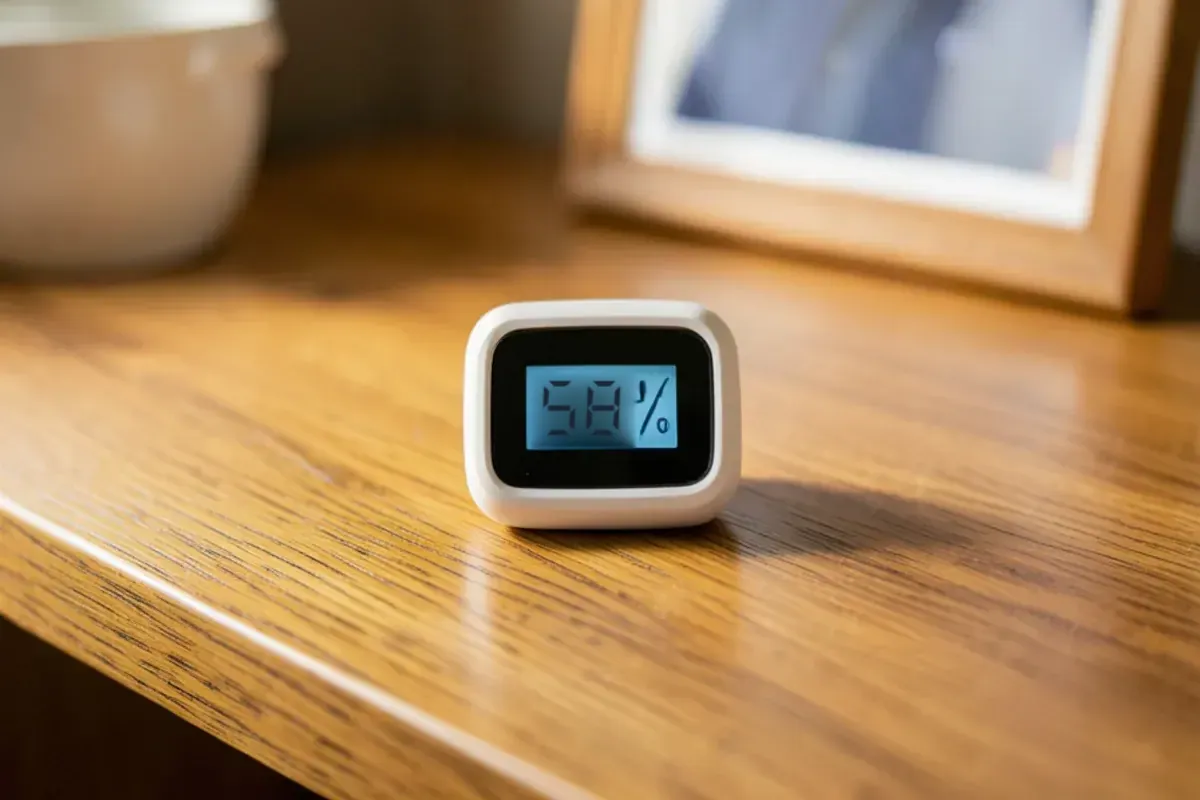
Start with a number. Buy a hygrometer and put it in the living room for a few days. EPA says indoor relative humidity should stay below 60 percent, ideally between 30 and 50 percent.
Log the reading morning and evening for three days, and note whether the AC was cycling or running steadily. A technician can use that log to narrow the cause. Then read the pattern:
- Short bursts of cooling, then silence: likely oversizing or a thermostat issue.
- Long runs, weak air, damp rooms: airflow, a dirty coil or low refrigerant.
- Damp smell near the basement door: moisture from the foundation, not the AC.
- Sticky upstairs rooms, cool downstairs: duct or zoning problems.
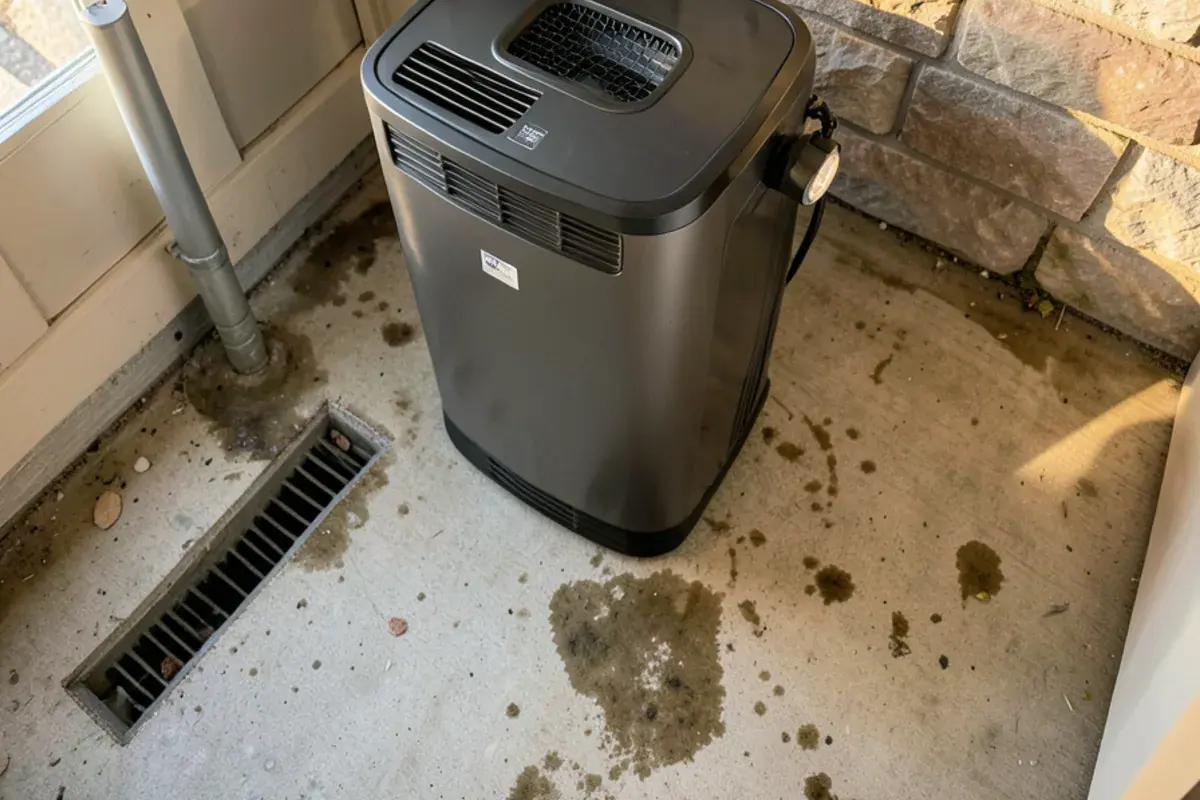
Older brick homes with basements add another source. Stone and block foundations can pass moisture all summer, and the AC then works harder to pull that moisture out of the air. Fixing a basement leak or running a dehumidifier there may change the whole house.
What your hygrometer reading is telling you
Use EPA's range as the yardstick and read the number alongside the cycling pattern.
| Reading over several days | What it suggests | Next step |
|---|---|---|
| 30 to 50 percent | In EPA's ideal range | If the house still feels clammy, check for cold spots and drafts instead |
| 50 to 60 percent | Under EPA's ceiling but sticky | Run the one-change-at-a-time test below |
| Above 60 percent | Over EPA's limit | Book a diagnosis, and look for a moisture source in the house |
A one-week test, one change at a time
Changing three things at once tells you nothing. Move through these in order and give each a day or two:
- Set the thermostat fan to Auto and compare the readings.
- Replace a loaded filter and note whether the supply air feels stronger.
- Run bath and kitchen exhaust fans during and after showers and cooking, and confirm the clothes dryer vents outdoors.
- Open the basement door for a day and see whether the reading near it climbs.
- Check that the condensate line is flowing while the AC runs.
If nothing moves the number, the cause is probably equipment size or ducts, and a technician should measure it.
Worked example: short cycles on a mild, muggy day
This is an illustration. Your log shows the compressor running about five minutes, stopping, and restarting ten minutes later, all afternoon, with the hygrometer stuck in the low 60s. The house is cool, the air is heavy, and the coil never gets a long run. That pattern points to oversizing or a control problem, not a bad filter. A long-running system with weak airflow and a frosted coil points the other way. The two look the same from the couch and need different fixes.
Humidity fixes compared, with honest trade-offs
| Fix | Helps most when | Trade-off |
|---|---|---|
| Seal and insulate ducts | Leaks or sweating in a hot attic or crawl space | Needs access, and benefit depends on how bad the leaks are |
| Variable-speed equipment or a dehumidify setting | The system is a little oversized | Only some thermostats and air handlers support it; check compatibility |
| Right-sized replacement | The unit is far oversized or past its life | Highest cost, so confirm the diagnosis first |
| Whole-house dehumidifier | The AC is sound and the house is still damp | Another machine to maintain, another drain and circuit |
A dehumidifier treats the symptom. If the AC is short cycling, fixing the cycling usually costs less than adding a machine to cover for it.
What AC faults leave humidity behind?
Four faults commonly leave humidity behind:
- A dirty evaporator coil or filter. Airflow drops and the coil can freeze, which stops dehumidification.
- A failing blower or fan motor. Weak airflow lowers capacity and leaves the house sticky.
- A clogged drain or pan. EPA advises making sure drain pans slope toward the drain and that the drain flows freely.
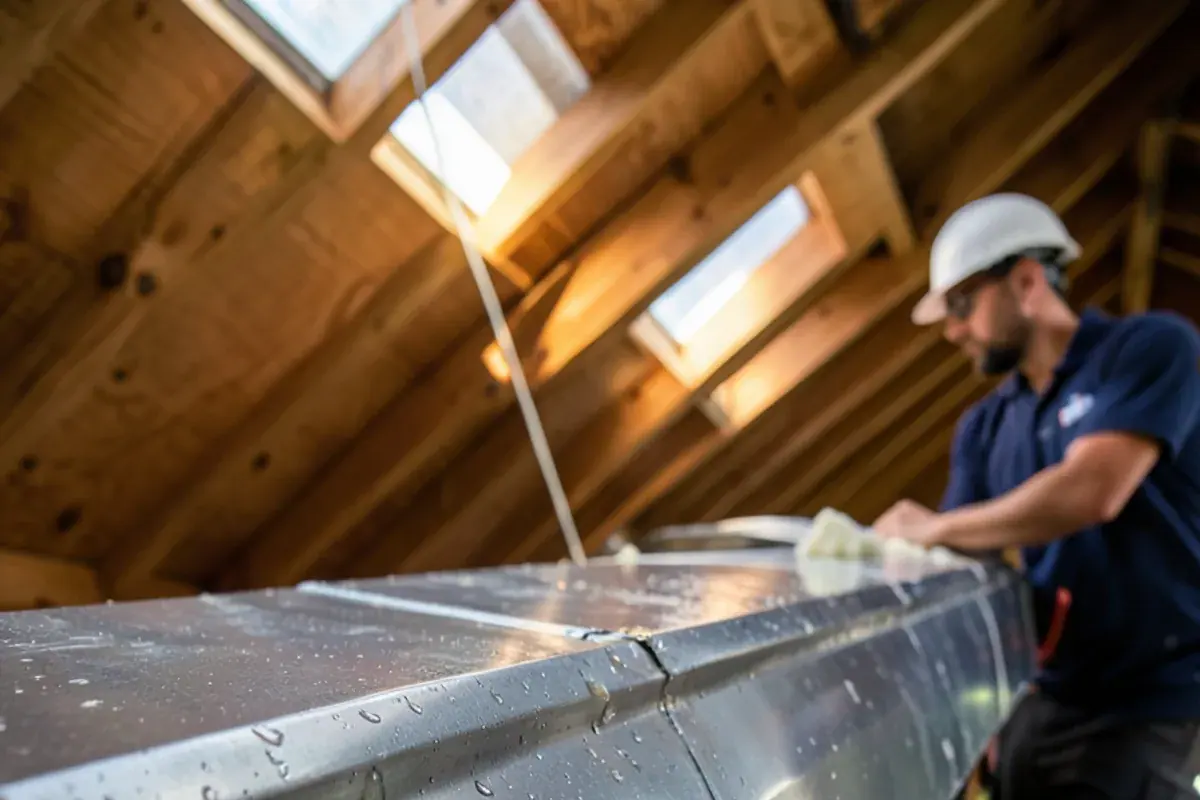
- Leaky or sweating ducts. Cold ducts in a humid attic or crawl space can sweat, and leaks pull humid air into the system.
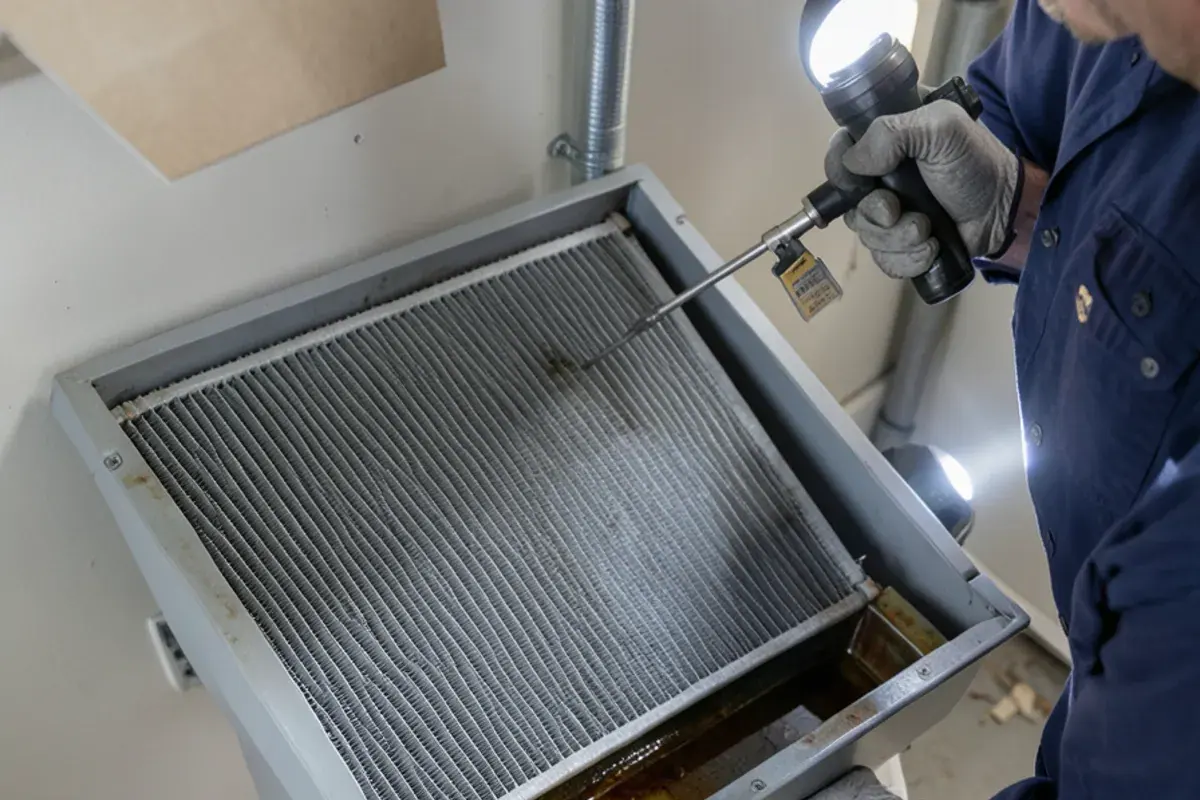
Ducts deserve a closer look than most owners give them. A return duct that leaks in a hot attic or a damp crawl space pulls that air straight into the system, and the coil then spends its effort on moisture that never needed to enter. Sealing and insulating the runs often helps a house feel drier without changing the equipment at all.
Our AC repair page explains how we test for these. A spring AC maintenance visit catches many of them before the first heat wave.
When is an oversized system the real problem?
When the AC reaches the setpoint in minutes and short cycles all afternoon. Many older replacements were sized by matching the old unit instead of calculating the house. A load calculation looks at wall construction, windows, insulation and orientation, then picks a capacity that runs longer on mild days.
You cannot fix an oversized condenser with a setting, but a technician can sometimes slow the blower for better moisture removal, and a variable-speed system handles part loads better. Right-sizing at replacement is the cleanest fix. If you are weighing that, our AC replacement page covers sizing.
From the field: a weak fan costs you comfort before it quits
A system does not have to stop to leave a house damp. A Google reviewer, Margaret S., wrote about a technician who moved fan blades that had stopped turning and advised that the motor was going out. A fan that barely moves can leave the unit short of capacity for weeks before it fails outright.
Another reviewer, Ms. O., described an old, rusty AC that leaked water and kept the house from reaching the right temperature. When a system is that far gone, no setting recovers the lost comfort. Both stories are reminders to diagnose first, since the cause decides whether a repair, a fix to the ducts or a new system is the answer.
Get the dampness diagnosed
Talk to a specialist at (321) 478-0693 if your AC runs and the air still feels heavy. We are open 24 hours and diagnose before replacing parts. We explain what we find, give you options and a clear, upfront quote before work starts. Homes in Ferguson are about 20 minutes from our base near Spanish Lake in normal traffic.
About the author
Kenan Perkins
Owner of Kenan Corporation. Studied at Ranken Technical College. The company, founded in 2010, is built on repairing systems honestly rather than pressuring people into new ones. More about us.
Sources
AC and Humidity: common questions
What indoor humidity level should I aim for in summer?
EPA says indoor relative humidity should stay below 60 percent, ideally between 30 and 50 percent. A readout above 60 percent on a cheap hygrometer for several days is a flag. It does not tell you the cause, so use the reading to decide whether to look at the system or the house.
Will lowering the thermostat fix a damp house?
Usually not. A lower setpoint makes the system run longer, which can dry the air a little, but it also overcools rooms and raises the bill. If the system is oversized or the airflow is weak, the dampness comes back as soon as the compressor cycles off.
Does running the fan on On make humidity worse?
It can. With the fan on between cycles, air moves over a wet coil and can pick moisture back up from it before the drain carries it away. Setting the fan to Auto is a free test. If the house feels drier within a day or two, the fan setting was part of it.
Is a whole-house dehumidifier the answer?
Sometimes. If the AC is the right size, sealed and clean and the house is still above 55 percent, a dehumidifier makes sense. If the AC is oversized or ducts leak, fixing that first costs less than adding a second machine to cover for the first.
Talk to an HVAC specialist
Tell us what your system is doing and where you are. Open 24 hours.
Kenan Corporation, 927 Broadhead Lane, St. Louis, MO 63138. Open 24 hours.
- 4.6★ on Google29 reviews
- A+ BBB ratingNot BBB accredited
- Founded in 2010Repair-first advice
- Open 24 hoursCall any time