
Local angles
Radiators or Forced Air? Choosing Heat for a Historic St. Louis Home
Boiler vs furnace is a real decision in a historic St. Louis home. If your radiators work, repair and maintain the boiler. If you want central air, a ducted system or mini splits can add it. This guide compares comfort, cooling, disruption and upkeep.
Published October 30, 2026 · Updated October 30, 2026 · By Kenan Perkins, Owner
- 4.6★ on Google29 reviews
- A+ BBB ratingNot BBB accredited
- Founded in 2010Repair-first advice
- Open 24 hoursCall any time
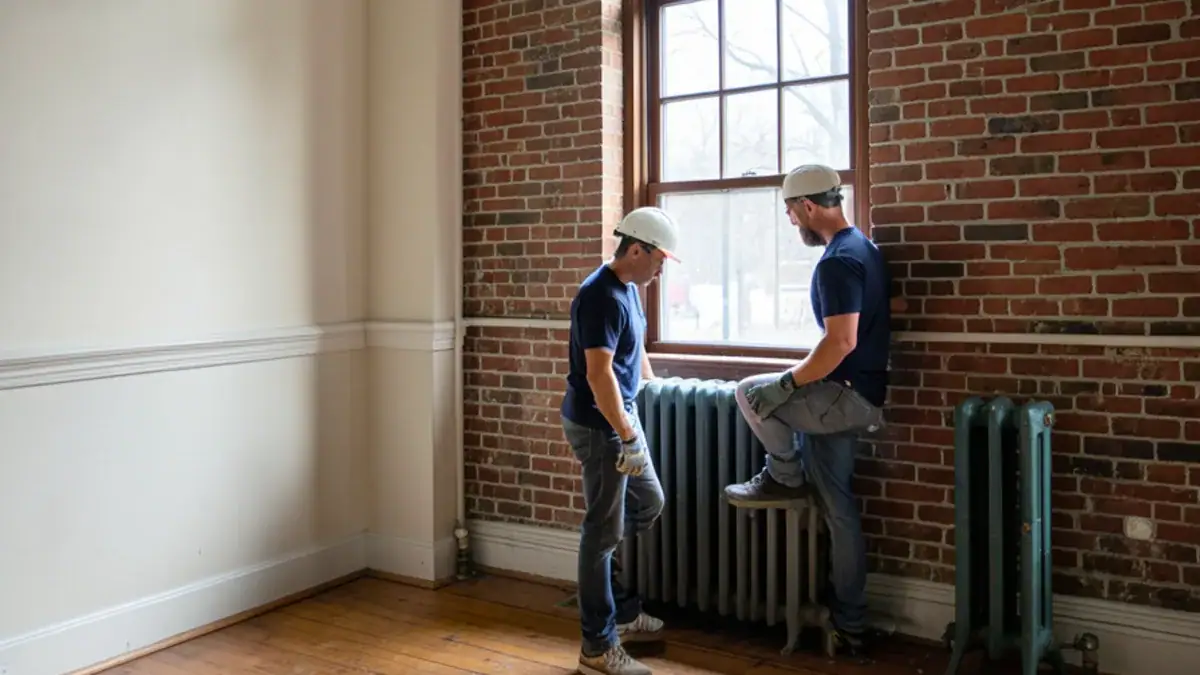
Boiler vs furnace in a historic St. Louis home usually comes down to one fact: do the radiators work? If they do, keep them and service the boiler. If you want central air, you can add cooling without removing a single radiator.
Why are so many St. Louis homes heated by boilers?
Because most of the housing was built before forced air became standard. Census figures compiled by Neilsberg put the City's median year built at 1938, against 1979 for Missouri and 1981 for the country. Point2Homes tallies 98,845 of 169,310 City homes, or 58.4%, from 1939 or earlier.
The Department of Energy describes how those systems work: steam travels through pipes to steam radiators, while a hot water boiler can feed baseboard units, radiant floors or air coils. Either way, the heat moves through water or steam rather than through air ducts.
Want a technician to take a look?
Call and tell us what the system is doing. You will get a clear, upfront quote before work starts.
- 4.6★ on Google29 reviews
- A+ BBB ratingNot BBB accredited
- Founded in 2010Repair-first advice
- Open 24 hoursCall any time
How do radiators and forced air compare?
Here is how the two stack up for a historic house:
| Factor | Radiators and boiler | Forced air furnace |
|---|---|---|
| Comfort | Even, quiet radiant heat | Faster response, moving air |
| Cooling | None; needs a separate system | Same ducts can carry cooling |
| Dust and filtration | No air movement, no filter | Filters capture some particles |
| Install disruption | None if you keep it | Ducts cut into plaster, closets or soffits |
| Space | Radiators take wall space | Registers and ducts take framing space |
| Repair | Parts and know-how vary by system | Widely stocked parts |
The point is that neither is better in the abstract. A radiator house with tall ceilings and thick walls can be more comfortable than a forced air house with undersized ducts.
What does it cost to keep a boiler running?
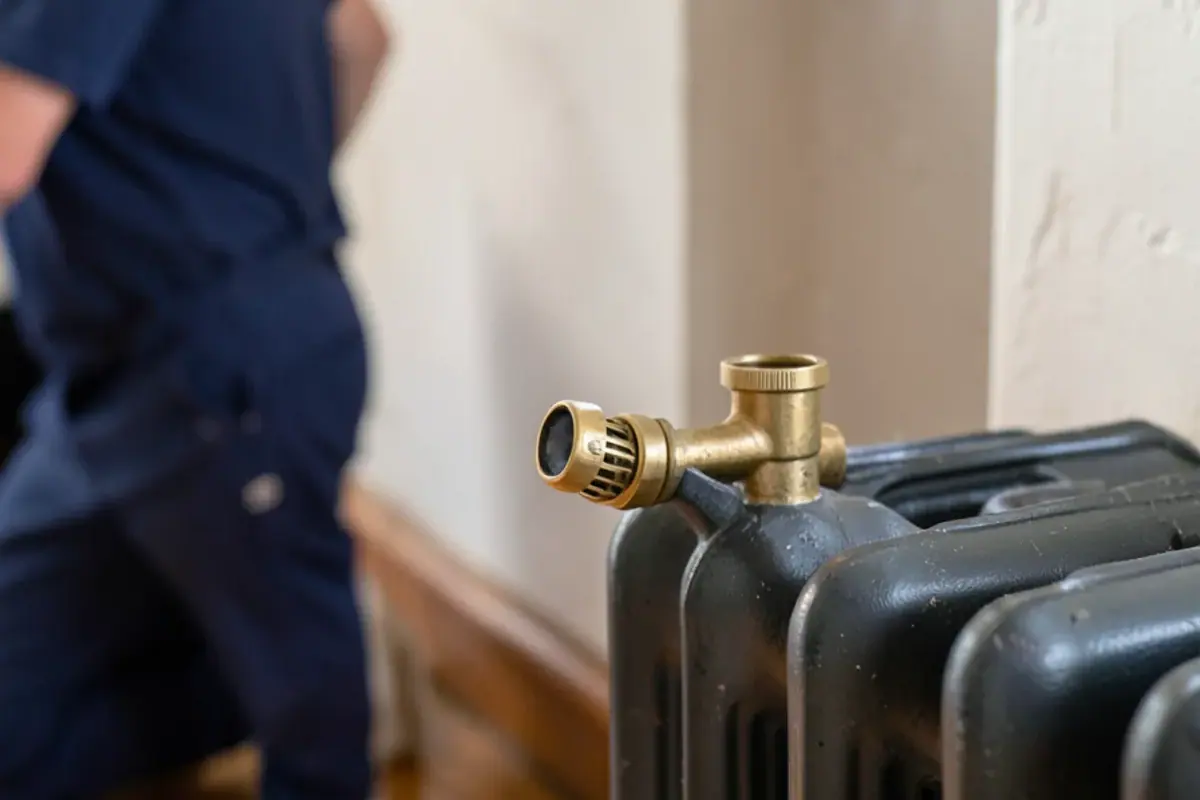
Mostly service. A steam or hot water boiler needs an annual check, clean burners, a tested low-water cutoff and sound piping. Our boiler service page explains what we look at. Repair is often the lower-cost path, which fits how Kenan Corporation works: we would rather repair your system than pressure you into a new one.
When replacement is on the table, the efficiency math is straightforward. DOE's federal minimums for new gas boilers are 80 AFUE for steam and 82 AFUE for hot water, while a new gas furnace has a minimum of 80 AFUE. A hot water boiler can reach higher efficiency, but converting a steam house to hot water means checking radiators and piping, since many steam systems run on a single pipe and cannot take a hot water boiler without rework.
What signs say a boiler is near the end?
Look for these before you decide anything:
- Water weeping from the boiler sections or from the base
- A steam boiler that needs water added constantly
- Rust-colored water, or soot around the burners and flue
- Loud banging in the pipes that returns after bleeding the radiators
- A boiler that cycles on and off every few minutes
Any one of these calls for a technician's look, and none alone proves replacement. A leaking valve is a repair. A cracked section is not.
Cold radiator, hot radiator: a repair or a replacement?
Uneven heat is the most common complaint in a radiator house, and it is usually cheaper than owners fear.
| Symptom | Likely cause | Direction |
|---|---|---|
| Steam: top-floor radiators stay cold | Stuck or clogged air vent valves, or a boiler not making enough steam | Repair |
| Steam: one radiator hisses and spits water | Radiator not pitched back toward the supply | Repair, often a shim |
| Hot water: a radiator is cool at the top | Trapped air | Bleed it |
| Hot water: several rooms cool, pump humming | Failing circulator or a closed valve | Repair |
| Either: repeated leaks at the boiler sections | Cracked or corroded sections | Replacement conversation |
The first four rows are a part or an adjustment. Only the last belongs in the replacement column.
Two background checks matter too. A steam boiler depends on its water level, so a low-water cutoff that shuts the burner off when the water runs low is tested at service. A hot water system depends on steady pressure, so a gauge that keeps dropping means water is escaping somewhere in the piping, even when no puddle shows.
Which path fits which house
| Your situation | Path that usually fits | Main trade-off |
|---|---|---|
| Radiators heat evenly, you want cooling | Keep the boiler, add mini splits or small-duct cooling | Two systems to maintain |
| Boiler is failing, radiators and piping are sound | Replace the boiler and keep the radiators | Venting and chimney work can add to the quote |
| Boiler and piping both failing, walls are open for a renovation | Ducted heat and cooling | Most disruption, and radiators come out |
| You want to reduce gas use | Heat pump for cooling and mild days, boiler for the cold ones | Needs a careful controls setup |
Quote items specific to a boiler replacement
A new boiler quote should answer questions a furnace quote does not:
- Does the boiler type match the radiators, or is a conversion involved?
- Will the old chimney need a liner for the new equipment, or is the venting changing?
- Is the near-boiler piping being replaced or reused?
- Who pulls the permit? In the City of St. Louis, replacement heating units need a mechanical permit and a contractor licensed in the City, per the City's mechanical permit page. Suburbs and the County differ, so ask the local building office.
- Is a load calculation included, and does it count the radiator surface?
Put each answer in the written quote. If a contractor cannot say what the old chimney needs, that is a reason to keep asking, including us.
When does forced air make sense?
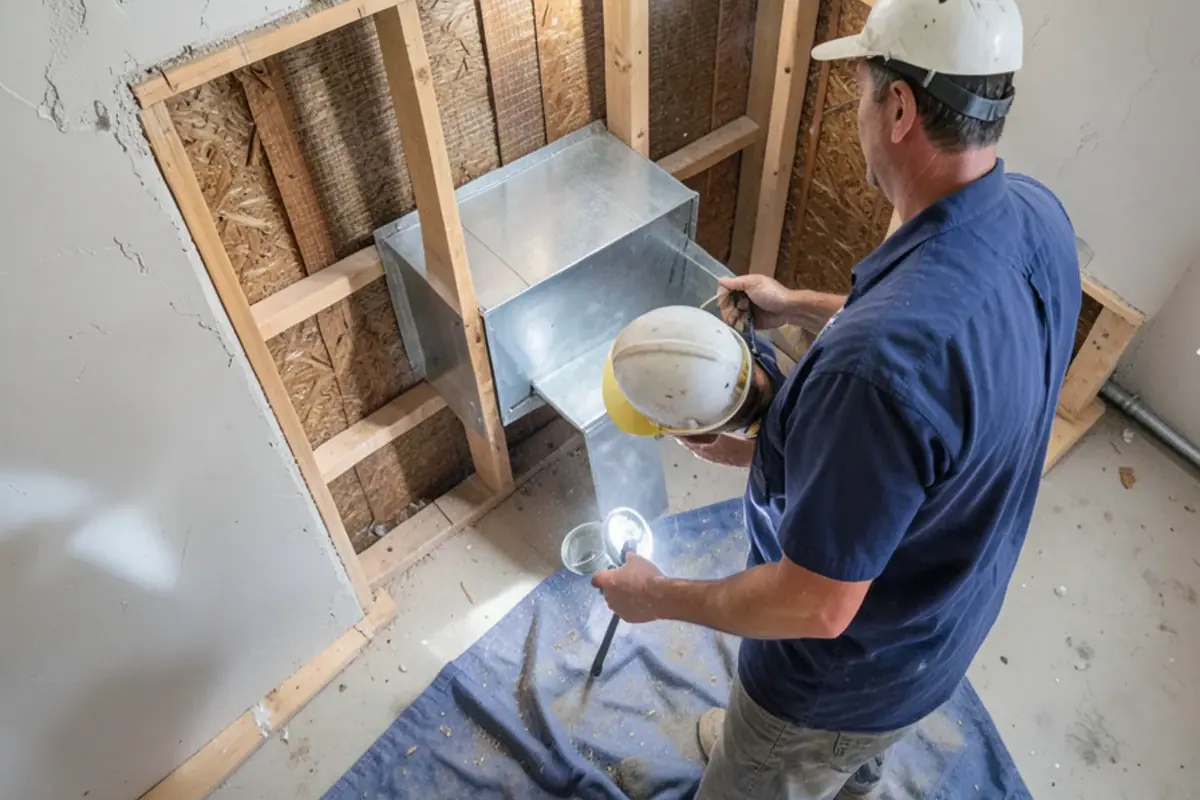
It makes sense in three cases: the boiler and piping are failing at once, you want central air from the same ducts, or you are renovating down to the studs anyway. The best candidates are houses where a full renovation already opens the walls.
The hard part is the route. Ducts need space, and historic houses give it up grudgingly. In many cases the cleaner solution is to keep radiators for heat and add cooling separately. ENERGY STAR lists older homes with radiators or baseboard heat as a good fit for mini splits, and our ductless mini split page walks through the details. For all-electric or dual-fuel setups, heat pump installation is another path, and furnace installation covers the traditional route.
From the field: ask for options, not a verdict
A Google reviewer, Monty M., described a technician who knew what the issue was, replaced the item and then checked whether everything else was working properly. In an old house with an aging boiler, that sequence is the right one: diagnose, repair the failing part, then look at the rest of the system. The same reviewer called the communication before, during and after the job a highlight, and that matters when a boiler decision costs real money.
A good contractor lays out the cases. Keep and service, repair a piece, convert, or replace, each with a price and a tradeoff. If someone recommends tearing out radiators on a first visit, ask what they tested.
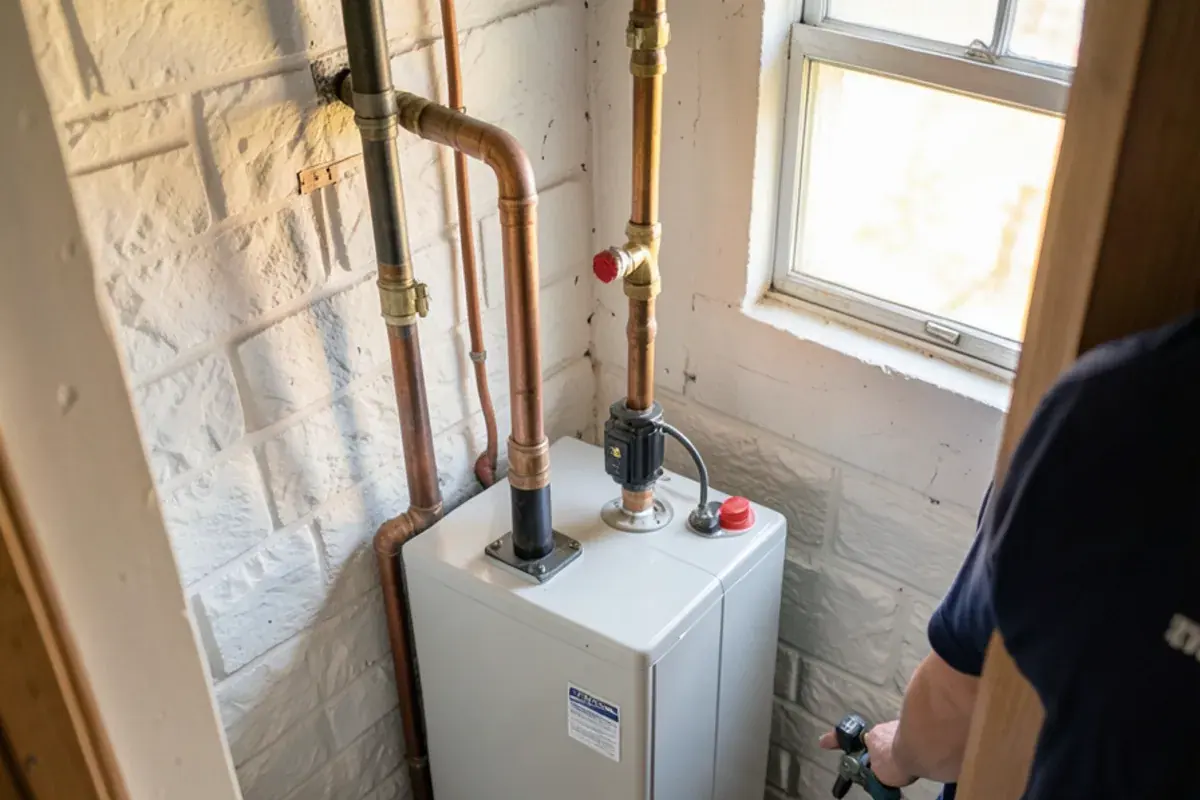
Have the system identified before you decide
Talk to a specialist at (321) 478-0693 and tell us what you have: steam or hot water, boiler age and what is failing. We are open 24 hours. We explain the problem in plain language and give you a clear, upfront quote before work begins. Homes in University City are about 30 minutes from our base near Spanish Lake in normal traffic.
About the author
Kenan Perkins
Owner of Kenan Corporation. Studied at Ranken Technical College. The company, founded in 2010, is built on repairing systems honestly rather than pressuring people into new ones. More about us.
Sources
Radiators or Forced Air: common questions
How do I know if my boiler is steam or hot water?
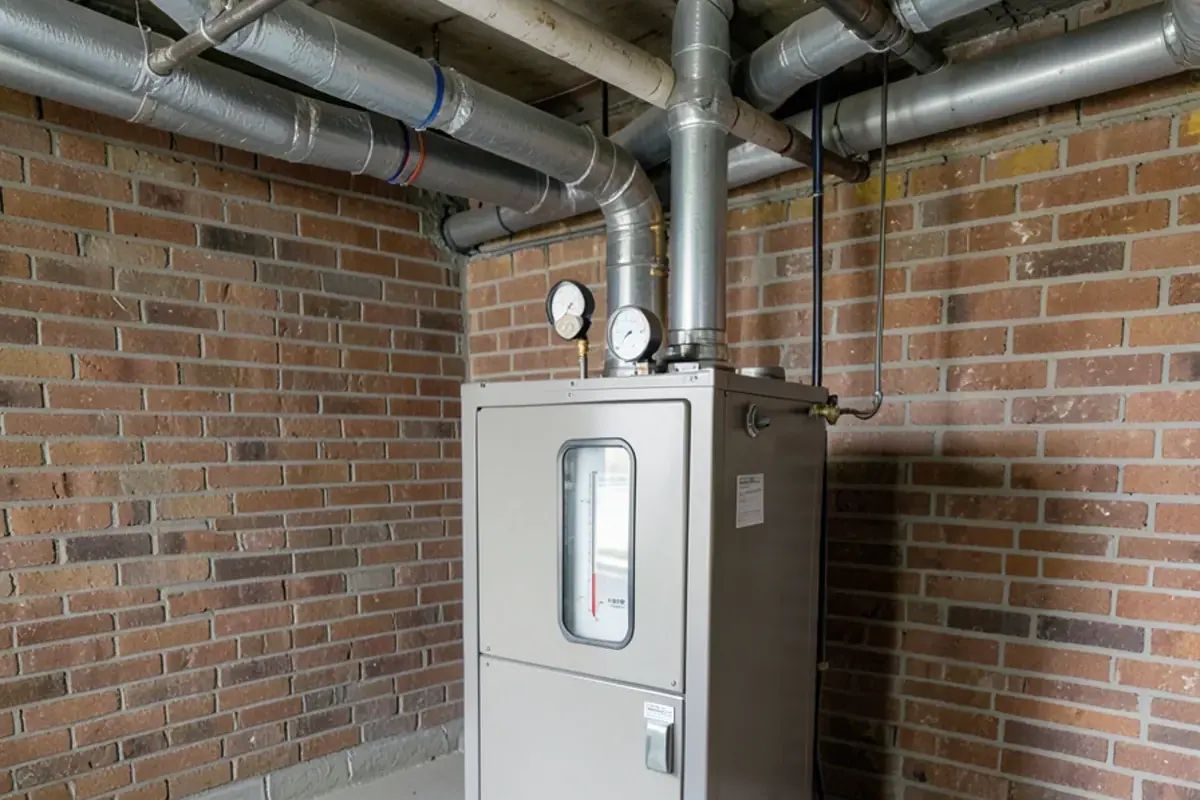
Look for a glass water gauge and a low-pressure gauge, which usually mean steam. Hot water boilers show a temperature and pressure gauge and a circulator pump. Steam radiators have a single pipe and an air vent. If you cannot tell, a technician can identify it in a short visit.
Can I add central air to a house heated by a boiler?
Yes. You do not need to disturb the boiler. Options include a ducted system through attic or basement space, a small-duct high-velocity system or ductless mini splits. Radiators and cooling run independently, so the choice depends on layout, walls and budget, not on the heat source.
Is it worth converting steam radiators to forced air?
Rarely, unless the boiler and piping are failing and you want central cooling at the same time. Converting means finding space for ducts in plaster walls and removing or abandoning radiators. A working boiler with regular service often costs less than the conversion would.
How long does a home boiler last?
Contractor sources put furnaces and boilers at about 15 to 20 years with routine maintenance, and cast iron boilers often run longer. Age matters less than condition. A boiler that holds pressure, fires cleanly and has been serviced is worth keeping, while one with a cracked section is not.
Talk to an HVAC specialist
Tell us what your system is doing and where you are. Open 24 hours.
Kenan Corporation, 927 Broadhead Lane, St. Louis, MO 63138. Open 24 hours.
- 4.6★ on Google29 reviews
- A+ BBB ratingNot BBB accredited
- Founded in 2010Repair-first advice
- Open 24 hoursCall any time
Services for this problem
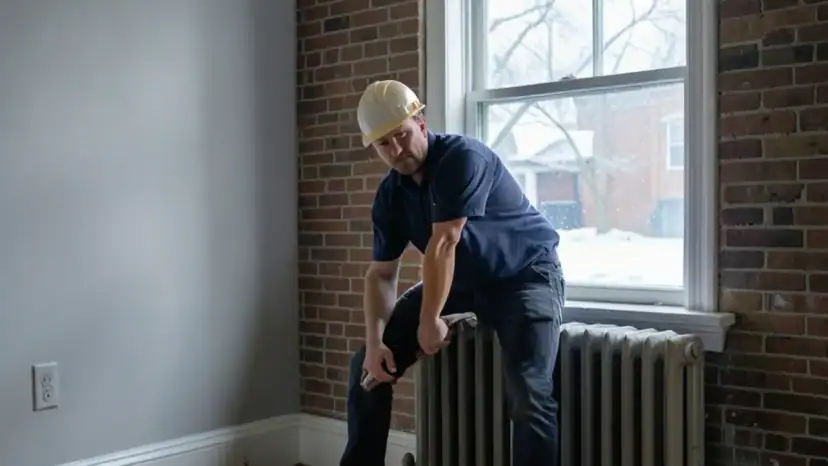
Boiler Service
Repair and replace boilers in St. Louis brick homes, steam or hot water.
Learn more →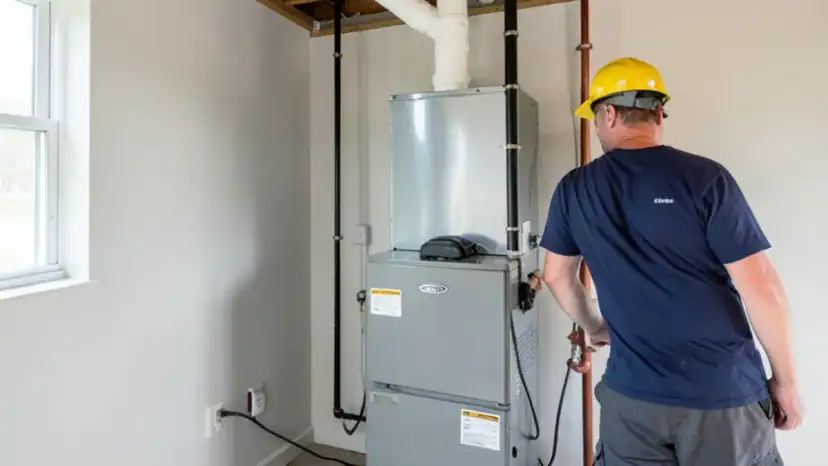
Furnace Installation
Sized by load calculation, with venting and gas work spelled out.
Learn more →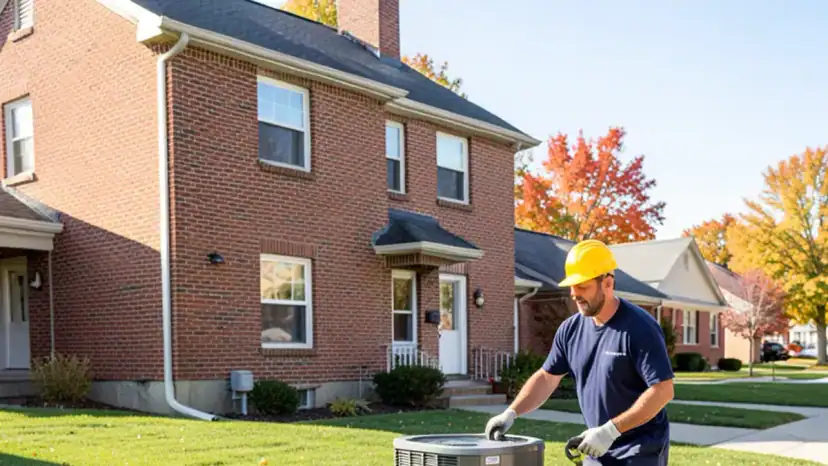
Heat Pump Installation
Sized from a load calculation, with Ameren and permit facts spelled out.
Learn more →