Emergency guides
No Heat at Night: Safe Steps Before You Call a Technician
If you have no heat, what to do first is rule out gas and carbon monoxide. Then warm one room, protect the pipes and run four safe checks. Call a technician when the furnace still will not start or when anyone at home is older, ill or very young.
Published October 30, 2026 · Updated October 30, 2026 · By Kenan Perkins, Owner
- 4.6★ on Google29 reviews
- A+ BBB ratingNot BBB accredited
- Founded in 2010Repair-first advice
- Open 24 hoursCall any time
No heat at night comes down to an order of operations: air safety, then warmth, then pipes, then the furnace. Most people reverse it and open the furnace first. Work through the sections below, and you will know both what is safe to try and when to call.
What do you check before anything else?
Check for gas and carbon monoxide before you touch a thermostat. A furnace that shut itself down may have done so for a reason.
- Gas smell. Leave the house, touch no switches and call 911 or Spire at 800-887-4173 once outside.
- CO alarm sounding. Get everyone outside into fresh air and call 911.
- Headache, dizziness or nausea in more than one person. Go outside. EPA says CO symptoms are easy to mistake for the flu.
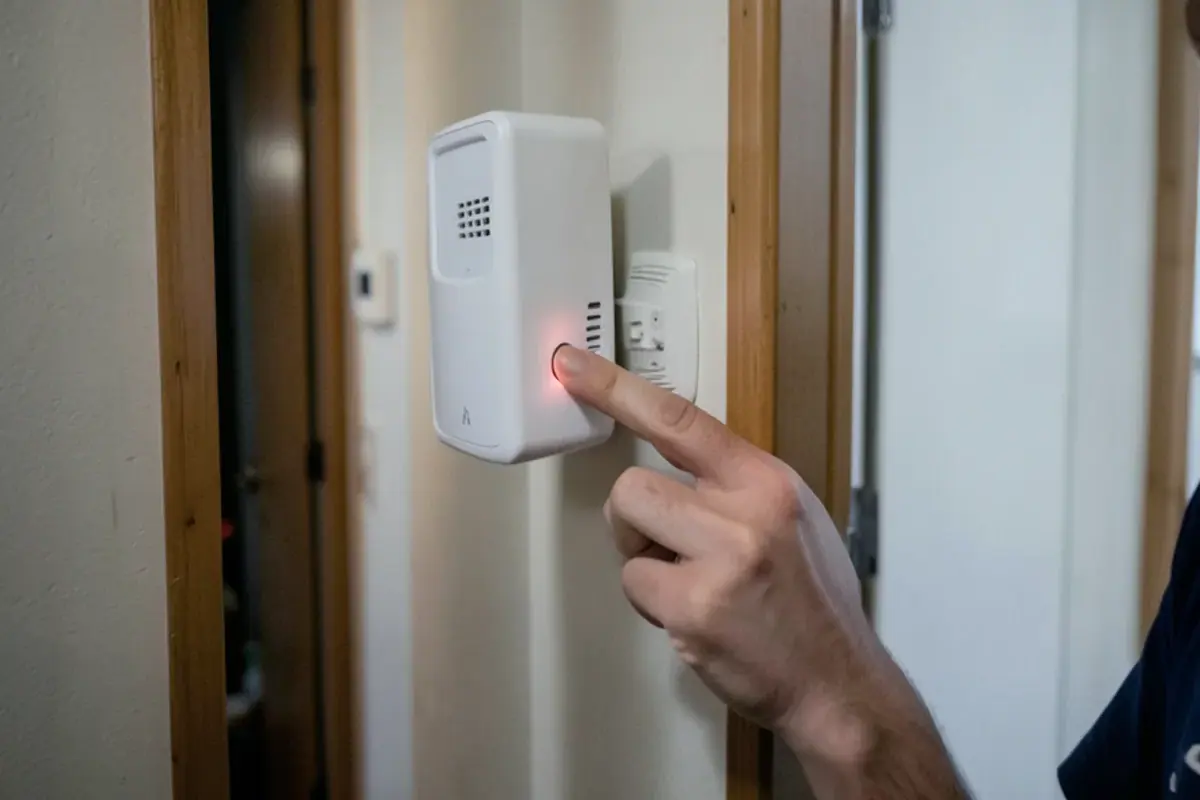
If none of those apply, move to the next steps. The CDC advises a battery or battery-backup CO alarm near every sleeping area.
Want a technician to take a look?
Call and tell us what the system is doing. You will get a clear, upfront quote before work starts.
- 4.6★ on Google29 reviews
- A+ BBB ratingNot BBB accredited
- Founded in 2010Repair-first advice
- Open 24 hoursCall any time
How do you stay warm without creating a hazard?
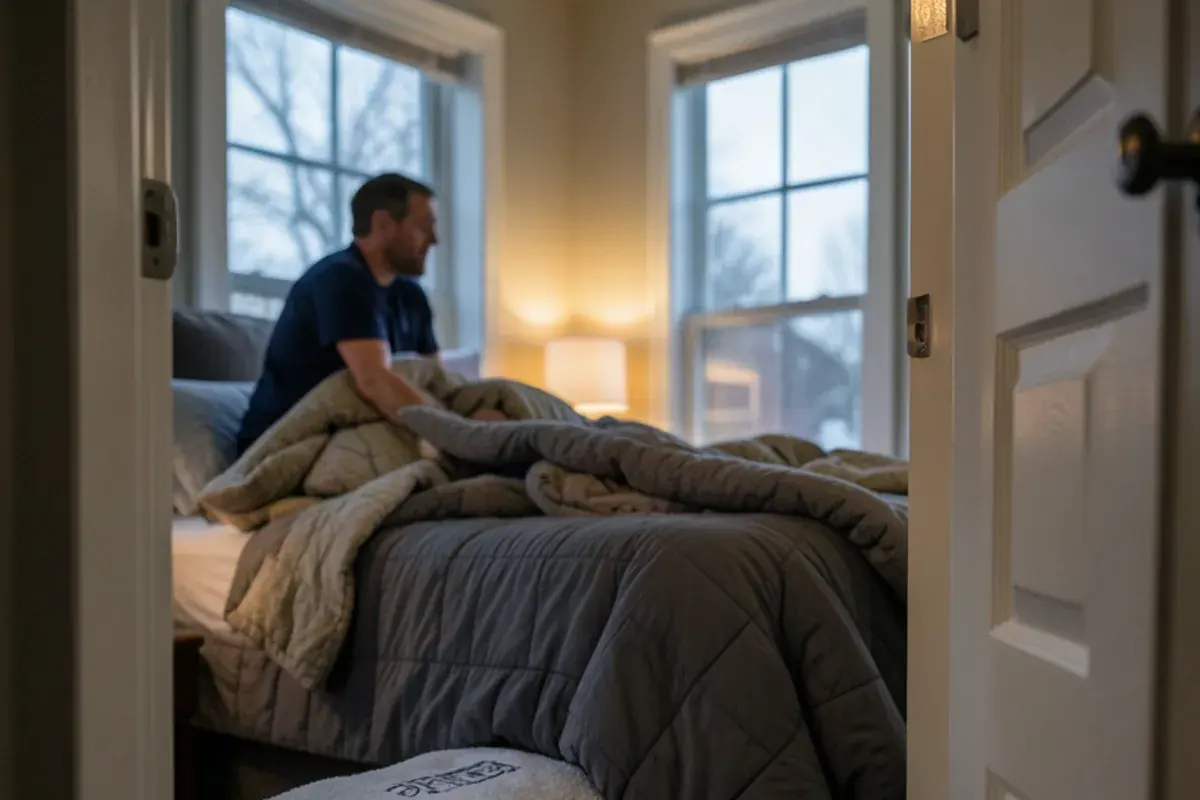
Heat one small room and stop there. The goal is to hold body heat until the furnace is fixed, not to heat the house.
| Do | Do not |
|---|---|
| Close one interior room and block the door gap with a towel | Heat the home with a gas oven or stovetop |
| Layer clothes and share blankets, covering head and neck | Run a generator or grill indoors or in a garage |
| Use a plug-in heater as its manual allows | Sleep in a room with an unvented gas or kerosene heater |
| Keep a CO alarm working near sleeping areas | Leave any heater running while you sleep unattended |
The CDC adds that older adults should keep an easy-to-read thermometer where they will see it often, since they may not notice temperature changes as easily. Phone older neighbors and relatives on a cold night.
Ready.gov and EPA both warn against gas ovens and indoor generators for heat. Ready.gov says generators belong outdoors, at least 20 feet from windows, doors and attached garages.
How do you protect the pipes overnight?
Keep water moving and room air reaching the pipes. The Red Cross advises these steps for a hard freeze.
- Let one or two faucets drip, starting with those on exterior walls.
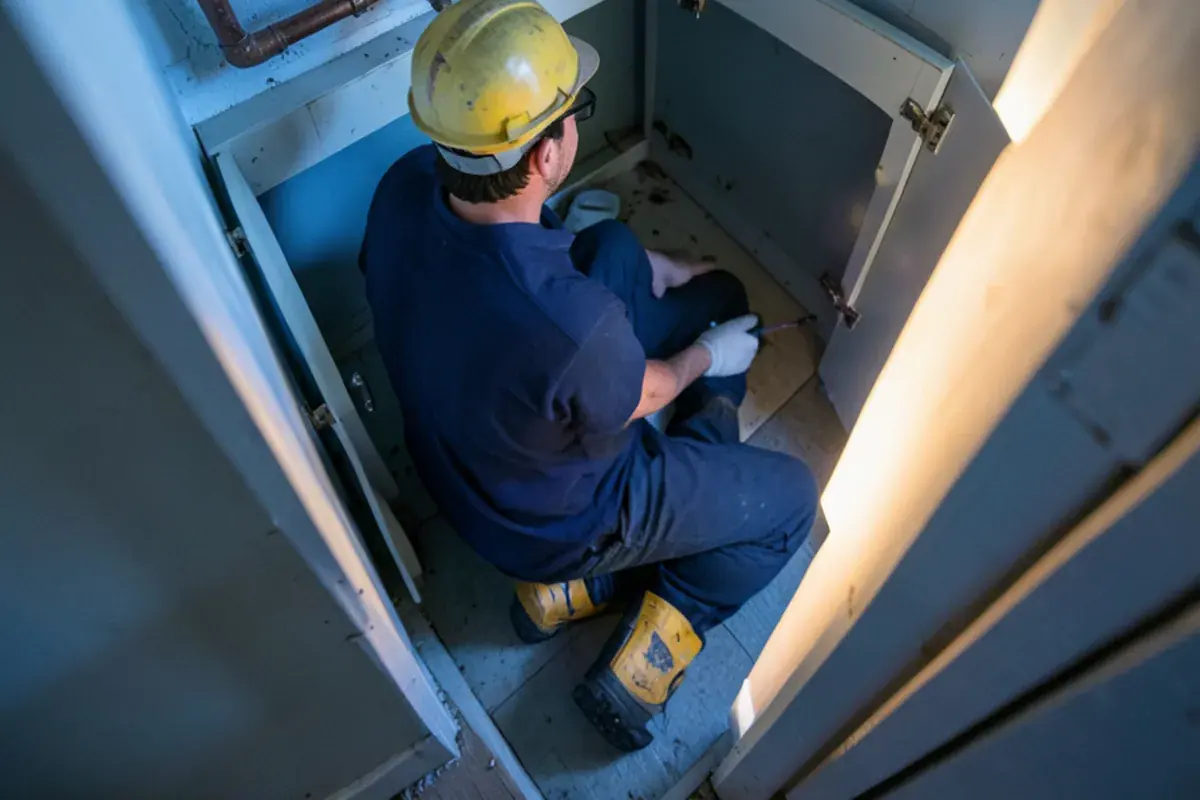
- Open sink and vanity cabinet doors so warm air reaches the pipes.
- Skip the lower nighttime thermostat setting if the furnace still runs part of the time.
- If a pipe freezes, open the faucet and warm the pipe with a hair dryer. Never use an open flame.
Learn where your main water shutoff valve is before a pipe bursts. If one does, shut the water off first.
Which furnace problems can you check yourself?
Four checks are safe for most households, and each takes under five minutes.
- Set the thermostat to Heat, raise the setpoint and replace its batteries.
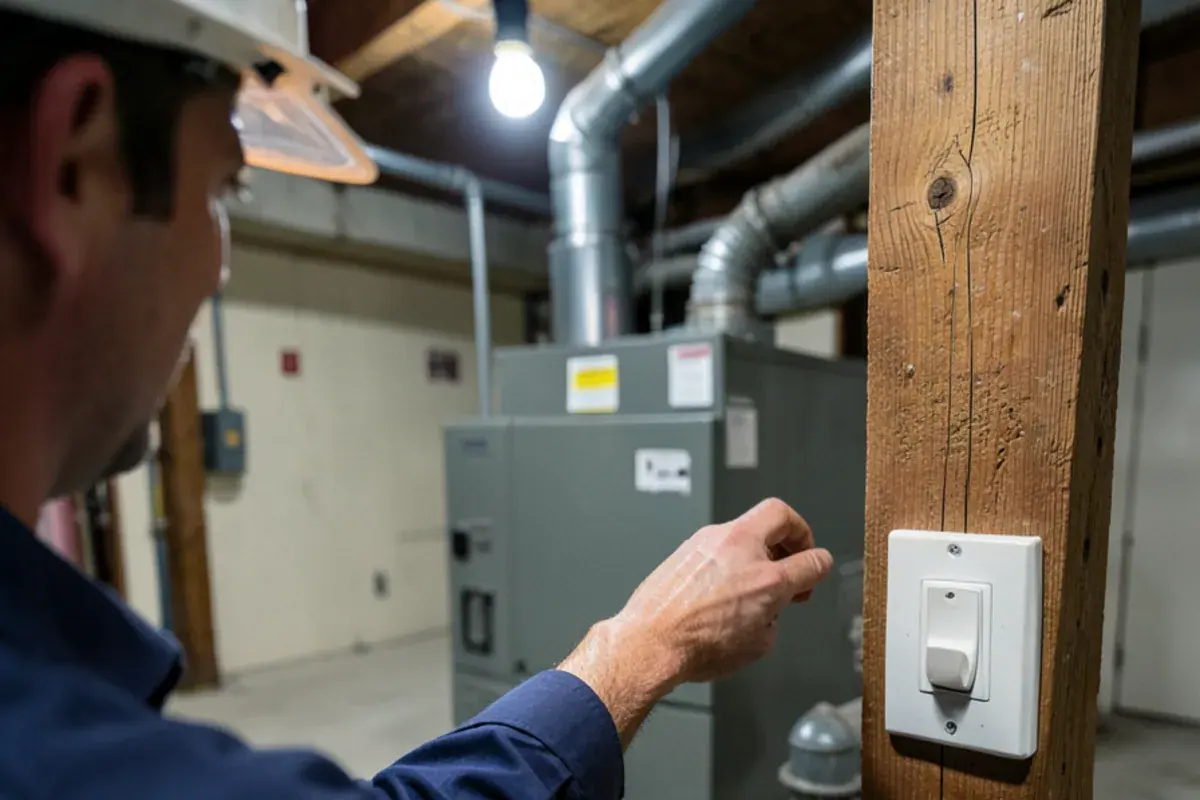
- Check the wall switch next to the furnace, which looks like a light switch.
- Check the furnace breaker and reset it once if it tripped.
- Pull the filter and replace it if you cannot see light through it.
Many furnaces have a small light behind a viewing window that blinks a fault code. Count the flashes and write down the pattern, because the code points the technician toward the failed part.
Stop there. Do not remove panels, relight a pilot you do not know how to light, or bypass a safety switch. Our guide to a furnace blowing cold air explains what the common faults look like, and the furnace repair page explains how a diagnosis runs.
Where does the furnace stop when it tries to start?
A gas furnace runs a fixed sequence, and the last stage you hear tells a technician where to look.
| Stage | What you hear or see | If it stops here |
|---|---|---|
| Call for heat | A click, then a low whir from the draft inducer | Silence: thermostat, switch or breaker |
| Pressure check | Inducer runs, then quits or cycles on and off | Blocked vent or a full condensate drain |
| Ignition | Igniter glows or clicks | Failed igniter or gas supply problem |
| Flame | Burners light, then go out in seconds | Dirty flame sensor |
| Blower | Warm air after a short delay | Weak heat points to a limit switch or blower |
Many furnaces lock out after a few failed ignition attempts and stay off for a while, so repeated resets only waste the night. Reset once, note the last stage, and stop.
Why check outside before the basement?
White PVC pipes through a side wall mean a high-efficiency furnace, and those pipes are its air supply and exhaust. Snow, ice or a nest can block them, and a pressure switch then keeps the furnace from starting. From a safe stance, clear loose snow from the pipe ends by hand. Do not chip at solid ice or change the pipes.
The same furnaces drain water through a condensate line, which can freeze in a cold basement or crawl space. Warm water thaws it; boiling water and open flame do not belong anywhere near cold PVC. A blocked exhaust is also a carbon monoxide risk, so if a vent was blocked, keep the CO alarm working and have a technician inspect before the furnace runs for long.
Should you call tonight or wait until morning?
The honest answer depends on the house, not the clock. Three situations show where the line falls.
- Healthy adults, house in the 60s, one warm room available: a morning call is reasonable. Keep the faucets dripping and write down the symptoms.
- House near 55°F with pipes on exterior walls: call tonight, because a burst pipe costs more than any after-hours visit.
- Anyone older, ill, pregnant or very young at home: call tonight and say so on the phone.
The trade-off is that a night visit finds the fault but cannot always finish the job. An igniter or capacitor is a routine replacement. A failed blower motor or a cracked heat exchanger is not, and parts for those may take another day. A cracked heat exchanger is a safety shutdown, not a sales opportunity, so ask to be shown the crack before you accept that verdict. Ask the same of any verdict that a furnace must be replaced, which is the situation Wendy R. describes below. A clear, upfront quote and a plain explanation of what failed are the two things to insist on, tonight or in daylight.
From the field: what no-heat calls look like in reviews
Reviews show ordinary households in the same bind. Mary E. wrote that the furnace stopped about 5 pm, the call was returned immediately, and the technician arrived at 7 am the next day, having wanted to come the night before. Gaquan C. wrote that the technician came out in 10-degree weather and the family had heat afterward.
Wendy R. wrote about a furnace that would not come on. Another company said a new furnace was needed without checking parts, but this technician found a capacitor and fixed it. The lesson for you is to ask what exactly failed before you agree to a replacement. Nobody can promise an arrival time on a freezing night, and these reviews are individual stories, not guarantees.
When should you call a technician right away?
Call right away when the house is dropping toward 50 degrees, when anyone at home is older, ill or very young, or when pipes run along exterior walls in a freeze. You can call a specialist at any hour, and same-day service is offered when the schedule allows. The quote comes before work starts.
Tell whoever answers the symptom, any blinking light on the furnace and who is at home. Our emergency furnace repair page explains the visit. For Clayton, the drive from our base near Spanish Lake is about 35 minutes in normal traffic, and Jennings is about 20 minutes. Next fall, book furnace maintenance before the first cold snap so the furnace does not fail on its first hard night.
About the author
Kenan Perkins
Owner of Kenan Corporation. Studied at Ranken Technical College. The company, founded in 2010, is built on repairing systems honestly rather than pressuring people into new ones. More about us.
Sources
No Heat at Night: common questions
How cold can a house get before pipes freeze?
Pipes on exterior walls and in unheated spaces are at risk once outdoor temperatures stay below freezing. Indoors, the Red Cross advises keeping the heat on and, when away, no lower than 55°F. Letting faucets drip and opening cabinet doors helps until the furnace is fixed.
Is it safe to sleep with a space heater on?
Follow the heater's manual, plug it directly into a wall outlet, keep bedding and curtains well clear and never leave it unattended. Skip any heater that burns fuel without venting. EPA warns against sleeping in a room with an unvented gas or kerosene heater.
Do I need to call 911 for no heat?
Not for no heat alone. Call 911 for a gas smell, a sounding CO alarm, someone showing hypothermia signs, or smoke. Ready.gov says a body temperature below 95 degrees is an emergency. For a dead furnace in a healthy household, call a heating contractor.
What if the furnace restarts after I reset it?
Treat it as a warning, not a cure. A furnace that restarts and then fails again is often shutting down on a flame sensor, limit switch or draft problem. Leave it running only if it heats steadily, and book a repair before the next cold night.
Talk to an HVAC specialist
Tell us what your system is doing and where you are. Open 24 hours.
Kenan Corporation, 927 Broadhead Lane, St. Louis, MO 63138. Open 24 hours.
- 4.6★ on Google29 reviews
- A+ BBB ratingNot BBB accredited
- Founded in 2010Repair-first advice
- Open 24 hoursCall any time