Emergency guides
What to Do When Your AC Stops Working in a Heat Wave
If your AC stopped working in a heat wave, protect people before equipment: move to the coolest room, drink water, use fans only below 90°F and watch for heat illness. Then run three safe checks and call for repair if the unit still will not start.
Published October 30, 2026 · Updated October 30, 2026 · By Kenan Perkins, Owner
- 4.6★ on Google29 reviews
- A+ BBB ratingNot BBB accredited
- Founded in 2010Repair-first advice
- Open 24 hoursCall any time
An AC that quits during a heat wave is a safety problem first and a repair problem second. For the next hour, your job is to keep everyone cool and watch for heat illness. After that, three simple checks tell you whether the fault is something small or something that needs a technician.
What should you do in the first 15 minutes?
Slow the heat gain, then hydrate. These steps work whether the outage lasts an hour or a day.
- Close blinds and curtains on the sunny side of the house.
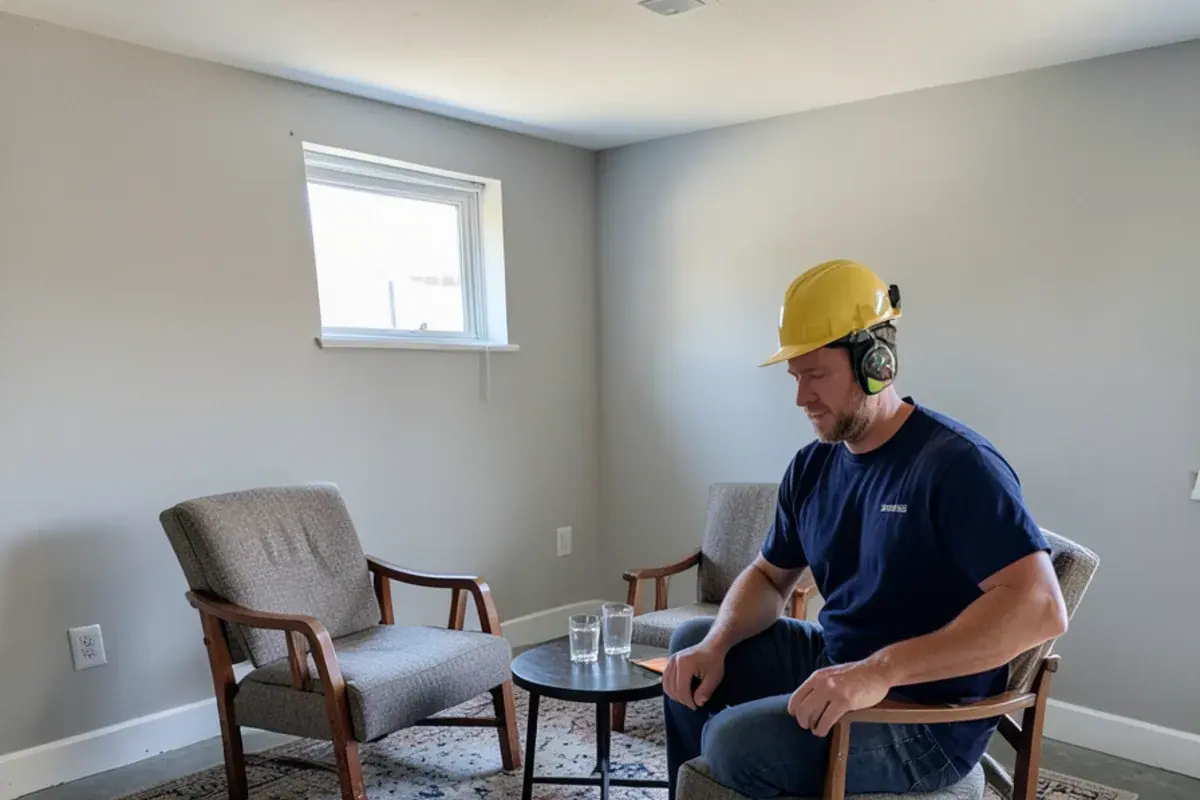
- Move everyone to the lowest, coolest room, which is usually a basement or a first-floor interior room.
- Drink water regularly. The CDC suggests limiting alcohol, caffeine and sugary drinks.
- Use cool damp cloths on the neck, wrists and armpits.
- Switch off ovens, stoves and dryers that add heat.
- Run a fan only if the indoor temperature is below 90°F. The CDC warns that above 90°F a fan can raise body temperature.
Want a technician to take a look?
Call and tell us what the system is doing. You will get a clear, upfront quote before work starts.
- 4.6★ on Google29 reviews
- A+ BBB ratingNot BBB accredited
- Founded in 2010Repair-first advice
- Open 24 hoursCall any time
Who is at the highest risk when the house heats up?
Older adults, infants and young children, pregnant people and anyone with a chronic condition face the highest risk, according to the CDC. Some medicines make dehydration or overheating more likely, so people on them should check with a doctor and not stop doses on their own. Pets suffer too, so move them to the cool room.
The National Weather Service separates heat exhaustion from heat stroke. Learn the difference before you need it.
| Heat exhaustion | Heat stroke | |
|---|---|---|
| Skin | Cool, pale, clammy | Hot, red, dry or damp |
| Signs | Heavy sweating, cramps, dizziness, nausea | Confusion, slurred speech, throbbing headache, faintness |
| Pulse | Fast and weak | Fast and strong |
| First step | Cooler place, cool cloths, small sips of water | Call 911, move to a cooler place, do not give fluids |
Seek medical help if heat exhaustion symptoms last longer than an hour or the person vomits. Heat stroke is an emergency at any time.
Can you fix a dead AC yourself?
You can check three things without tools, and each takes a few minutes.
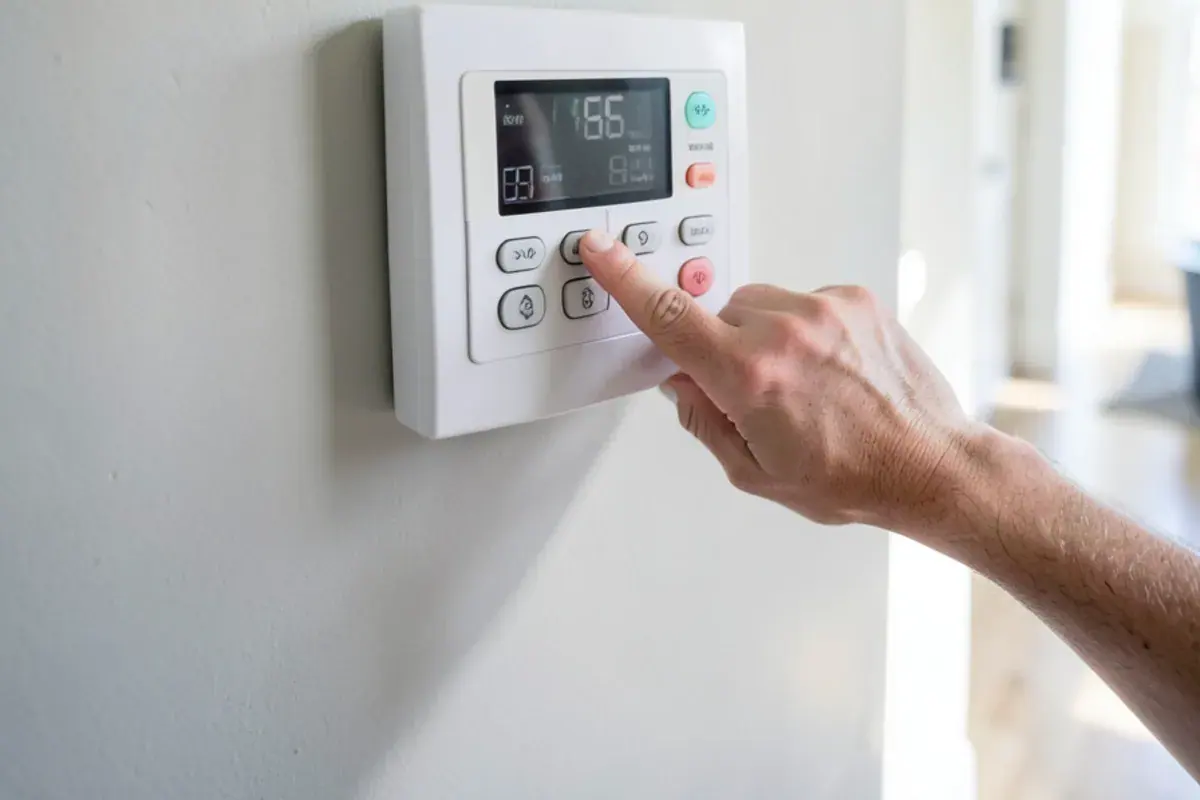
- Thermostat. Confirm the mode is Cool, set the temperature below the room reading and replace the batteries.
- Breaker. Reset the air handler or condenser breaker once. If it trips again, leave it off.
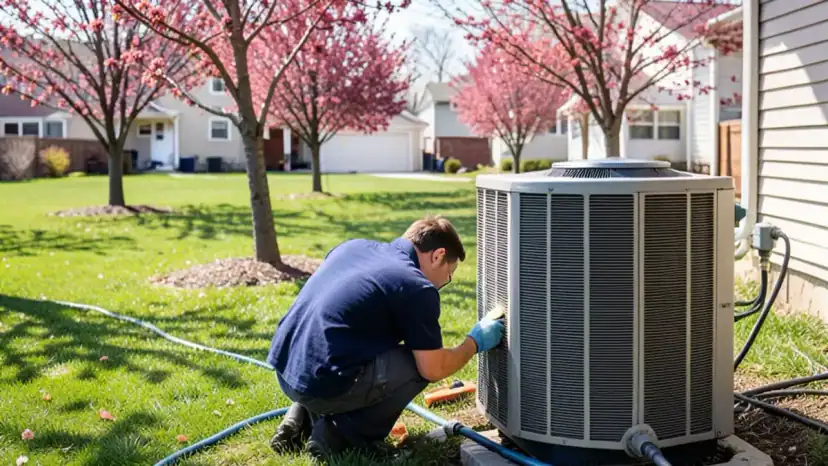
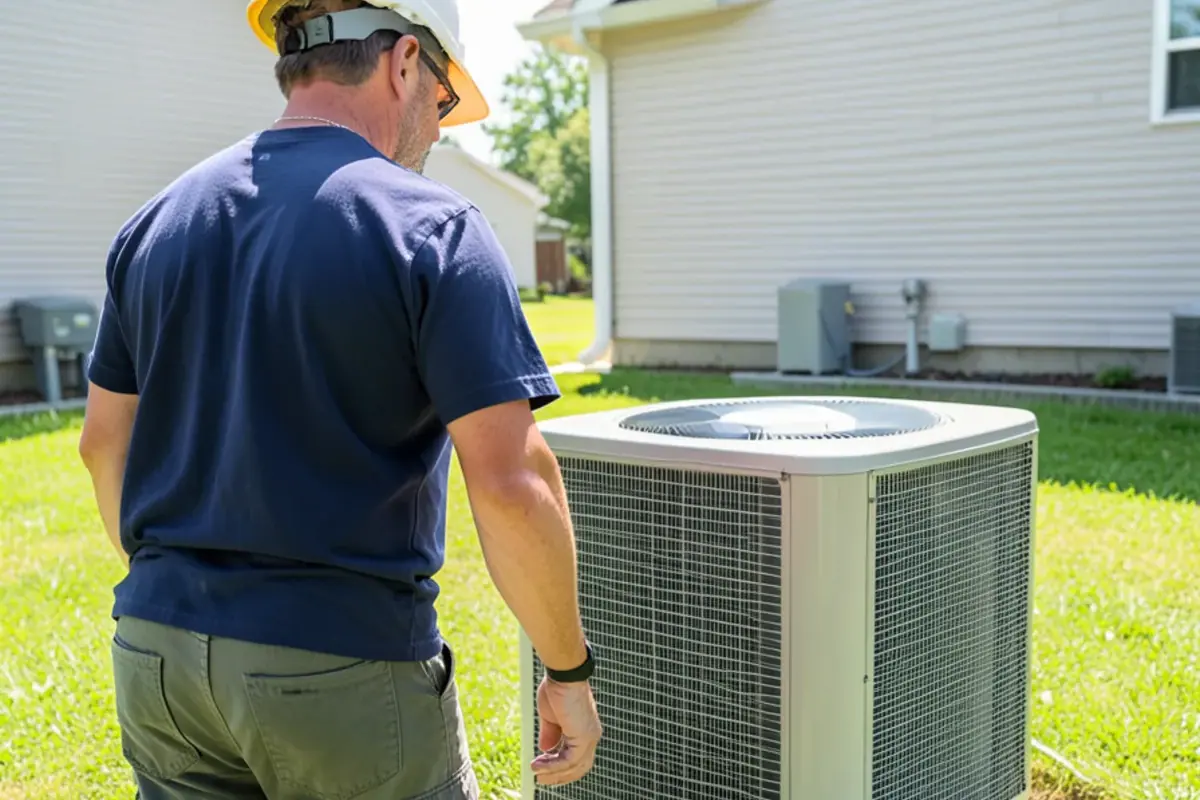
- Filter and outdoor unit. A clogged filter can freeze the coil, and cottonwood can block the condenser. Clear what you can reach without opening a panel.
If you see ice on the copper lines, switch the AC to Off and the fan to On so the coil thaws. Do not open electrical panels, spray water into a running unit or add refrigerant yourself. Those jobs belong to a technician, and our emergency AC repair page lists what is checked on a hot-weather visit.
How long should you wait before restarting?
Wait five minutes after switching off. The compressor has to start against pressure still sitting in the refrigerant lines, and a quick restart can trip the breaker or finish off a weak capacitor. If you found ice, wait far longer: leave the fan running with cooling off until the coil is clear, which often takes several hours, because an early restart just refreezes it.
What do the symptoms usually point to?
What you hear and see narrows the cause before anyone arrives. Water in the pan under the indoor unit is worth mentioning on the call.
| What you notice | Common cause | Who handles it |
|---|---|---|
| Indoor blower runs, outdoor fan is silent, air is room temperature | Failed capacitor, contactor or compressor | Technician |
| Outdoor unit hums or clicks but the fan will not spin | Weak start capacitor or seized motor | Technician; keep hands and tools out of the fan |
| Thermostat blank, nothing runs | Dead batteries or a tripped breaker | You, once |
| Everything runs, airflow weak, air not cold | Frozen coil or clogged filter | You thaw and replace the filter; technician if it returns |
| System shuts off by itself on a humid day | Full condensate pan tripping a float switch | Technician clears the drain line |
Why do air conditioners fail during heat waves?
They fail because heat waves ask the most of worn parts. The National Weather Service recorded 49 days at or above 90°F in St. Louis in 2025 and 1,904 cooling degree days against a normal of 1,713. That much run time exposes weak capacitors, motors and contactors.
Humidity adds to the load, since an AC removes moisture as well as heat, and a condensate drain clogged by algae can shut a system down. Older houses near University City, about 30 minutes from our base near Spanish Lake in normal traffic, often have upstairs rooms that run hotter than the rest, so sleep downstairs during the outage.
From the field: what AC outages look like in reviews
Customers describe the same pattern again and again, and it is less dramatic than you might fear. Kristie S. wrote about waking at 1 am to a house at 90 degrees and receiving a visit within 12 hours. Kiesha C. wrote that the AC went out over a weekend, that the temperature rose and that it ran again less than 20 minutes after the technician arrived.
A third reviewer, Margaret S., wrote about a repair that had never really happened. A prior person had supposedly replaced a capacitor, but the technician found no new capacitor and advised that the fan motor was going out. The lesson for you is to ask what was found and what was replaced. We cannot promise a time for your call, but the reviews show why describing the symptom precisely matters.
How do you keep a house livable while you wait for a repair?
Plan for one cool room, one night and one stopgap, not for the whole house.
Use night air, then seal up
When the outdoor temperature drops below the indoor reading, open windows on the shady side and set a box fan in one window facing out. Close everything by mid-morning. St. Louis nights often stay muggy after a hot day, so compare the two readings first, because air no cooler than the house only adds humidity. The CDC's 90°F fan limit still applies indoors.
Treat a window unit as an electrical load
A borrowed window unit is a fair bridge for one bedroom. Plug it straight into a grounded wall outlet, as window-unit owner's manuals typically instruct, and skip extension cords and power strips, which can overheat under a compressor's load.
Decide when to leave
- Signs of heat stroke: call 911; do not drive.
- Indoor reading at or above 90°F, or any higher-risk person at home: go to a cooling center, library or relative's home.
- House under 90°F and everyone healthy: staying in the cool room is a reasonable choice.
What does a technician weigh before calling it a repair or a replacement?
A heat wave is a bad time to buy a new system, and the outside temperature should not bend the diagnosis. Three things matter more than the age on the nameplate.
- What failed. A capacitor or contactor is a small repair. A seized compressor or a leaking coil is a large one.
- Which refrigerant it uses. R-22 production and import ended January 1, 2020, so a leak in an R-22 system depends on reclaimed or stockpiled supply and is a harder repair than the same leak on a newer unit.
- Repair history. A third breakdown in two summers changes the math even when each fix was cheap.
The trade-off is real. A repair gets you cool tonight and may buy a season or more on a unit in its commonly quoted 15-to-20-year life, according to contractor sources. A replacement is a better long-term bet but rarely happens the same day, because it needs a load calculation for sizing and a planned install. We would rather repair your system than pressure you into a new one, and our repair-or-replace guide lays out where that line usually sits. Whoever you hire, ask for the options in writing with the part, the labor and what else was checked.
When should you call, and what should you say?
Call right away if anyone at home is vulnerable, if the unit smells of burning, or if water or ice is present. Otherwise call as soon as the checks fail. The shop is open 24 hours, and same-day service is available when the schedule allows.
Have these details ready:
- Whether the outdoor fan and the indoor blower are running
- What the thermostat shows and the indoor temperature
- Any ice, water or burning smell
- Who is at home and whether anyone is vulnerable
You will hear the price before work starts, and the technician diagnoses before replacing parts. For the wider picture of how after-hours calls work, read our emergency HVAC overview. To avoid the call next summer, schedule AC maintenance before the first heat wave. If you are in Ferguson, the drive from our base is about 20 minutes in normal traffic.
About the author
Kenan Perkins
Owner of Kenan Corporation. Studied at Ranken Technical College. The company, founded in 2010, is built on repairing systems honestly rather than pressuring people into new ones. More about us.
Sources
What to Do When Your AC Stops Working in a Heat Wave: common questions
How hot can a house get before it is dangerous?
There is no single line, because risk depends on age, health and humidity. The CDC says fans stop helping once indoor air passes 90°F, and higher-risk people should move to an air-conditioned place well before that. If anyone feels confused or faint, treat it as an emergency.
Is it okay to turn the AC off and on to reset it?
One reset is fine: switch off at the thermostat, wait five minutes, and restart. Repeated cycling stresses the compressor and can trip the breaker. If it fails to start twice, leave it off, run the indoor fan only and call for a technician.
Where can I go if the house is too hot?
The CDC suggests an air-conditioned public place such as a library, mall or cooling center, and says calling 2-1-1 can point you to local options. Bring water, medicines and anyone who is vulnerable, and check on neighbors who live alone.
Should I wait until morning to call for repair?
Call tonight if anyone at home is older, ill, pregnant or very young, or if the house is already past the upper 80s. Otherwise note the symptoms and call first thing. Kenan Corporation is open 24 hours, and a call describes the situation either way.
Talk to an HVAC specialist
Tell us what your system is doing and where you are. Open 24 hours.
Kenan Corporation, 927 Broadhead Lane, St. Louis, MO 63138. Open 24 hours.
- 4.6★ on Google29 reviews
- A+ BBB ratingNot BBB accredited
- Founded in 2010Repair-first advice
- Open 24 hoursCall any time