Problem solving
Why Is My AC Blowing Warm Air? 7 Common Causes
An AC blowing warm air usually comes down to a thermostat setting, a clogged filter, a frozen or dirty coil, a failed electrical part, a refrigerant leak or a failing compressor. Start with the no-cost checks, then call a technician for anything electrical or refrigerant-related.
Published October 30, 2026 · Updated October 30, 2026 · By Kenan Perkins, Owner
- 4.6★ on Google29 reviews
- A+ BBB ratingNot BBB accredited
- Founded in 2010Repair-first advice
- Open 24 hoursCall any time
An AC blowing warm air has seven usual suspects: thermostat settings, a clogged filter, a frozen indoor coil, a dirty outdoor coil, a failed electrical part, a refrigerant leak and a failing compressor. The first four are often cheap or free to check. The last three need a technician with the right meters, gauges and certification.
What should you check first when your AC blows warm air?
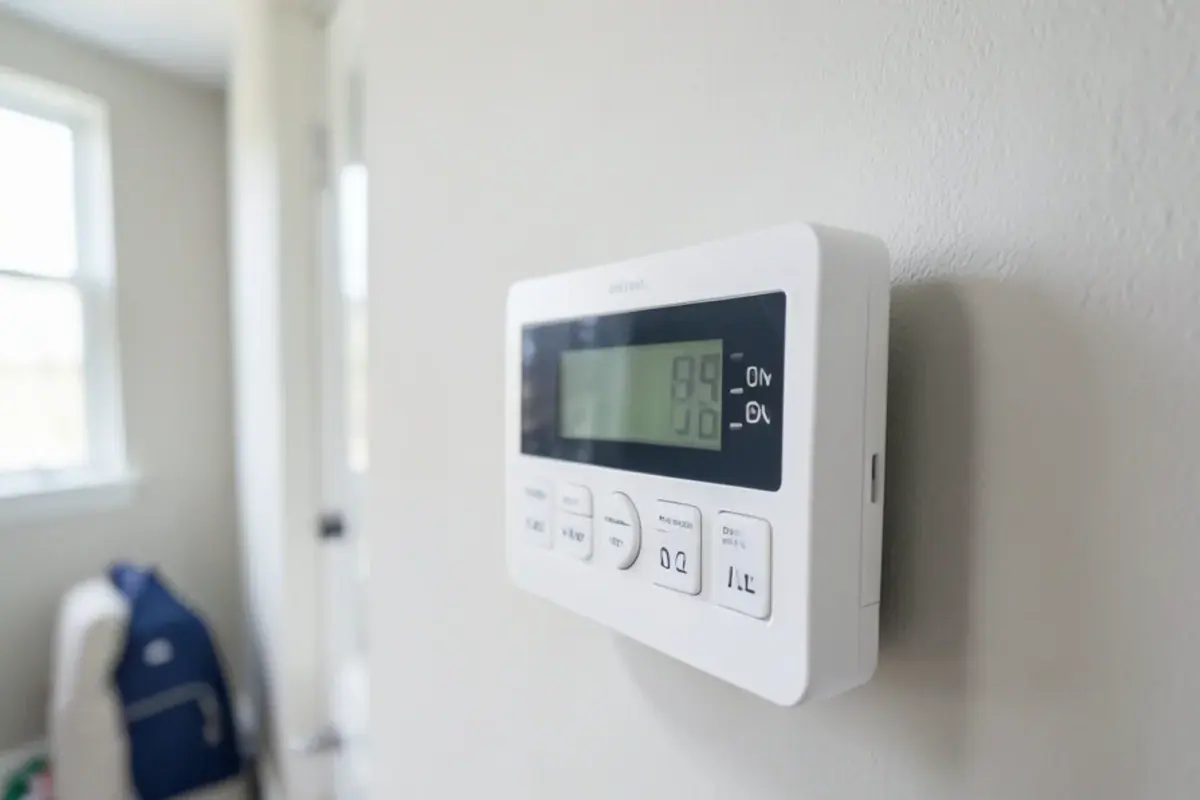
Start at the thermostat, then the filter, then the breaker. These checks take ten minutes and cost nothing.
- Set the mode to Cool, drop the setpoint at least three degrees below room temperature, and set the fan to Auto.
- Pull the filter and hold it to a light. If you cannot see through it, replace it.
- Check the breaker for the outdoor unit and the indoor air handler. A tripped breaker is a symptom, so if it trips again, stop resetting it.
- Walk outside. If the outdoor fan is not spinning, note that for the technician.
Want a technician to take a look?
Call and tell us what the system is doing. You will get a clear, upfront quote before work starts.
- 4.6★ on Google29 reviews
- A+ BBB ratingNot BBB accredited
- Founded in 2010Repair-first advice
- Open 24 hoursCall any time
The seven causes at a glance
| # | Cause | What you notice | Who fixes it |
|---|---|---|---|
| 1 | Thermostat mode, setpoint or dead batteries | Fan runs, outdoor unit silent | You |
| 2 | Clogged filter | Weak airflow, rooms warm up gradually | You |
| 3 | Frozen evaporator coil | Ice on the larger copper line, water on the floor after a thaw | Thaw it, then a technician finds the cause |
| 4 | Dirty or blocked condenser coil | Outdoor unit hot, air only slightly cool | You can clear debris; a technician cleans deep |
| 5 | Failed capacitor or contactor | Humming, outdoor fan or compressor will not start | Technician |
| 6 | Refrigerant leak | Ice, hissing, cooling that fades over weeks | Technician |
| 7 | Compressor failure | Breaker trips, loud buzzing, no cooling at all | Technician |
Why do a dirty filter and a frozen coil blow warm air?
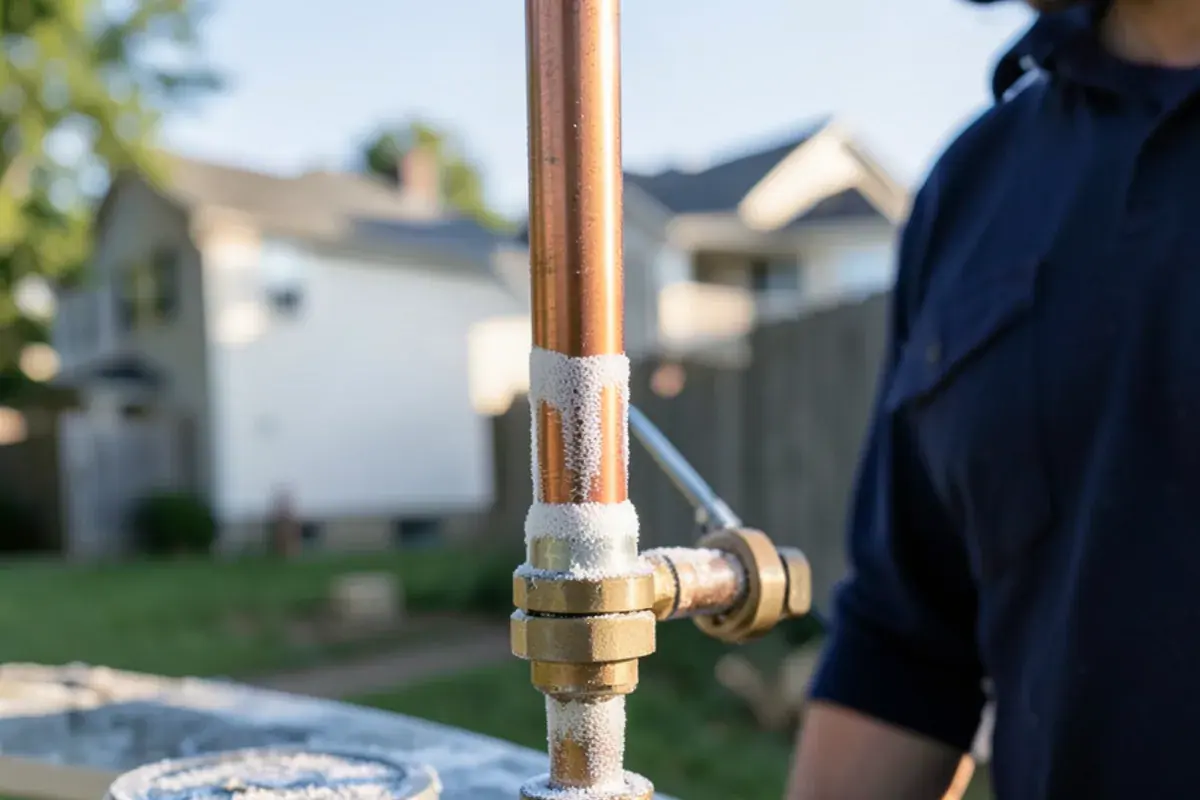
Both start with restricted airflow. ENERGY STAR says airflow problems can cut a cooling system's efficiency by up to 15 percent, and the worst case is not a weak system but an iced one. When too little warm house air crosses the evaporator, the coil drops below freezing, ice builds up and the airflow shrinks further.
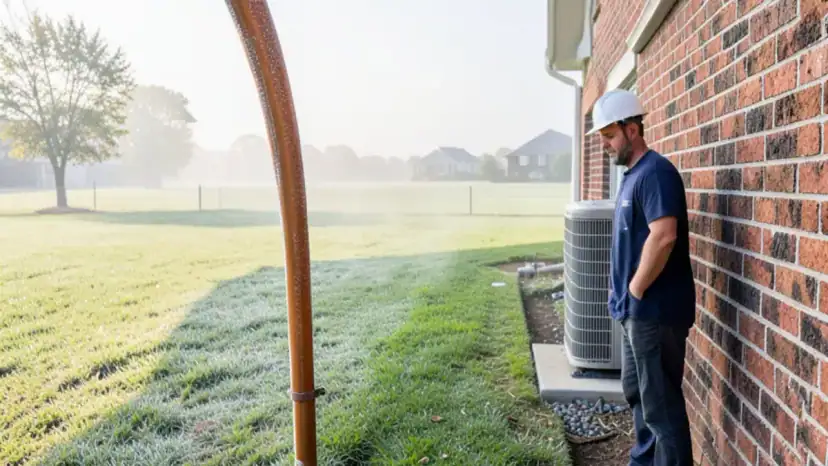
To thaw it, switch the thermostat to Off, set the fan to On and wait a few hours. Do not chip the ice. If it freezes again after a new filter, the cause is lower in the system: a blower issue, a blocked return or low refrigerant.
Can a dirty outdoor coil make an AC blow warm air?
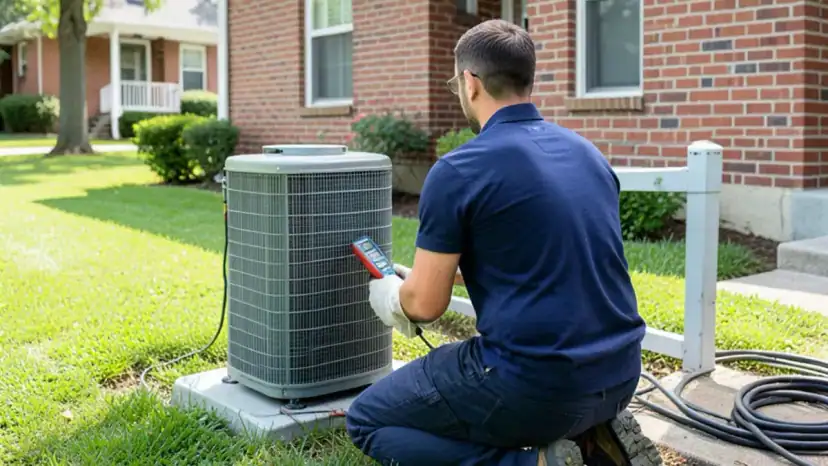
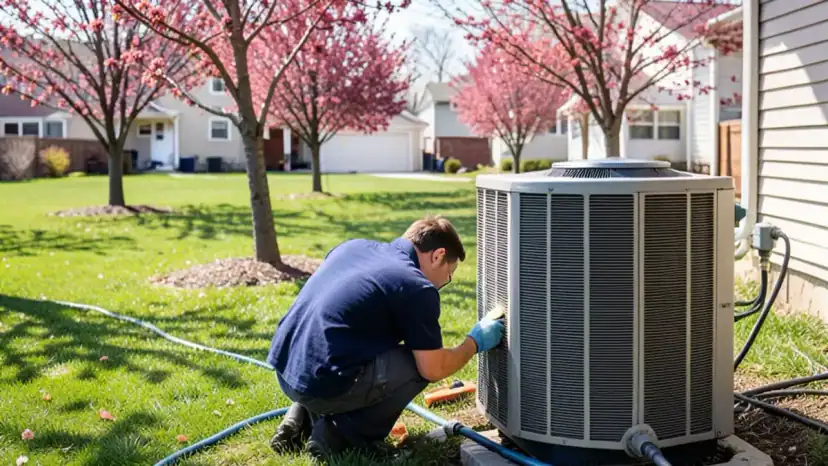
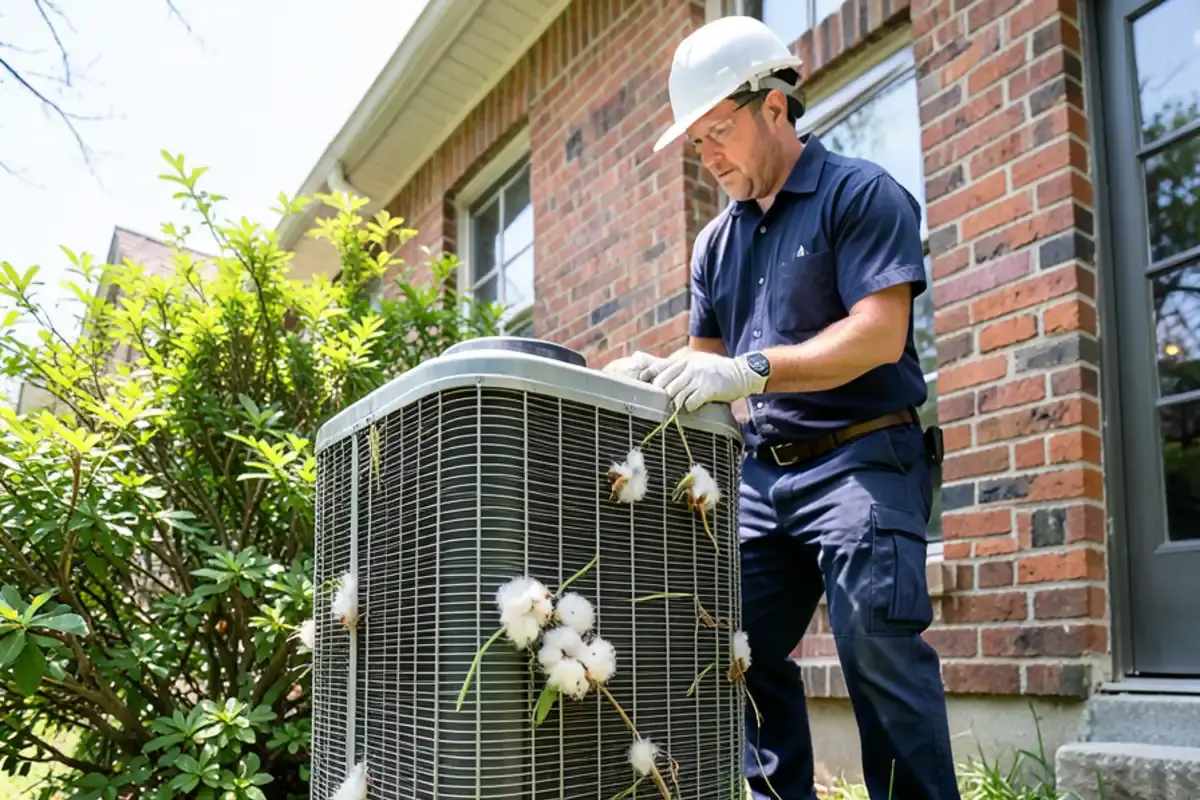
Yes. The condenser rejects the heat your house gave up, and matted fins keep it from doing that. With the power off at the outdoor disconnect, clear leaves, grass clippings and cottonwood fluff from around the unit. Leave about two feet of open space on every side.
A gentle garden-hose rinse from the outside of the fins helps, but never use a pressure washer, and never pry panels off. Coil cleaning that reaches the inside faces belongs to a technician, and it is one reason spring tune-ups matter.
Failed capacitors and contactors
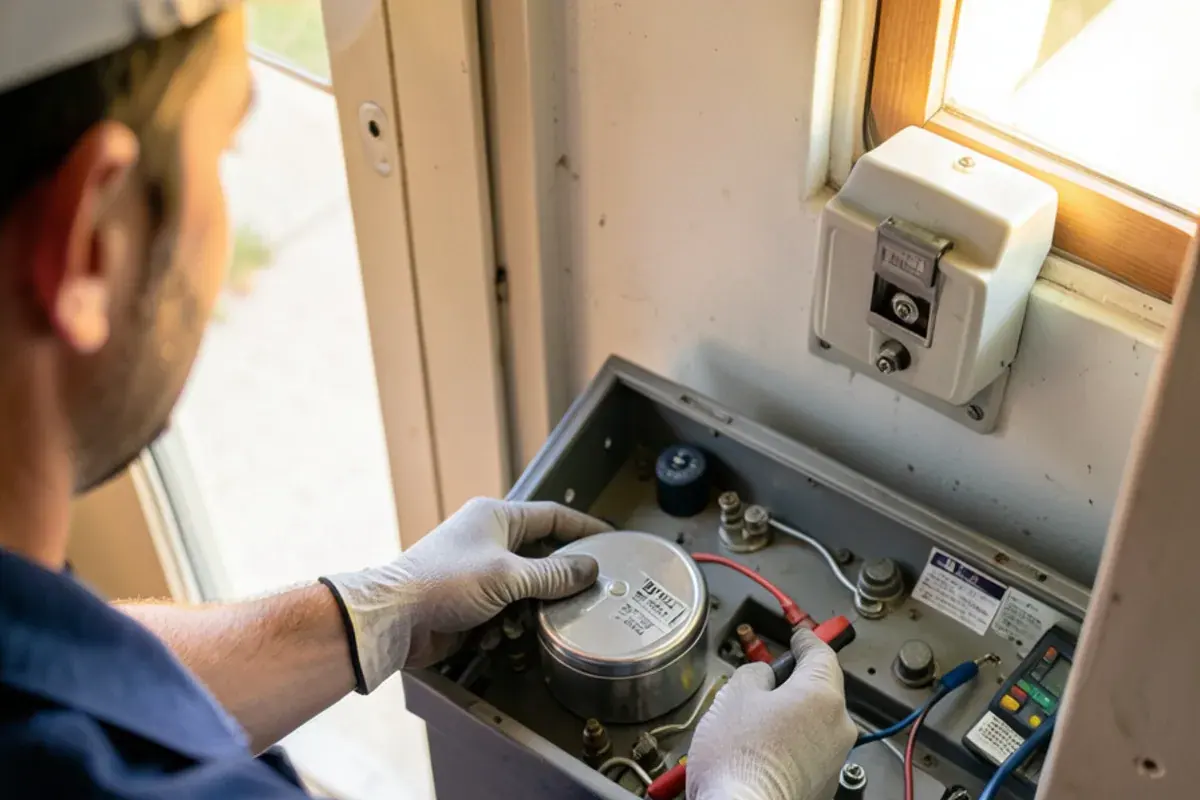
A weak capacitor is the most common cheap repair behind a warm-air call. It gives the compressor and the outdoor fan the jolt to start. When it fails, you hear a hum or a click, and the indoor blower keeps pushing room-temperature air.
Capacitors store a charge even with the power off, which is why this is technician work. The same goes for a pitted contactor, the relay that switches the outdoor unit on.
Is low refrigerant the reason your AC is blowing warm air?
Possibly, but refrigerant does not get used up. If the charge is low, there is a leak. The EPA advises homeowners to have a technician locate and repair the leak rather than top it off, and says only Section 608-certified technicians can buy and add refrigerant.
Signs include ice on the lines, a hissing sound and cooling that fades over weeks. Our refrigerant leak repair page explains how a leak is found instead of guessed at. If the compressor itself has failed, you will often see a tripped breaker or a loud buzz, and the repair-or-replace question gets real. Our repair or replace guide covers it.
What a thermometer can and cannot tell you
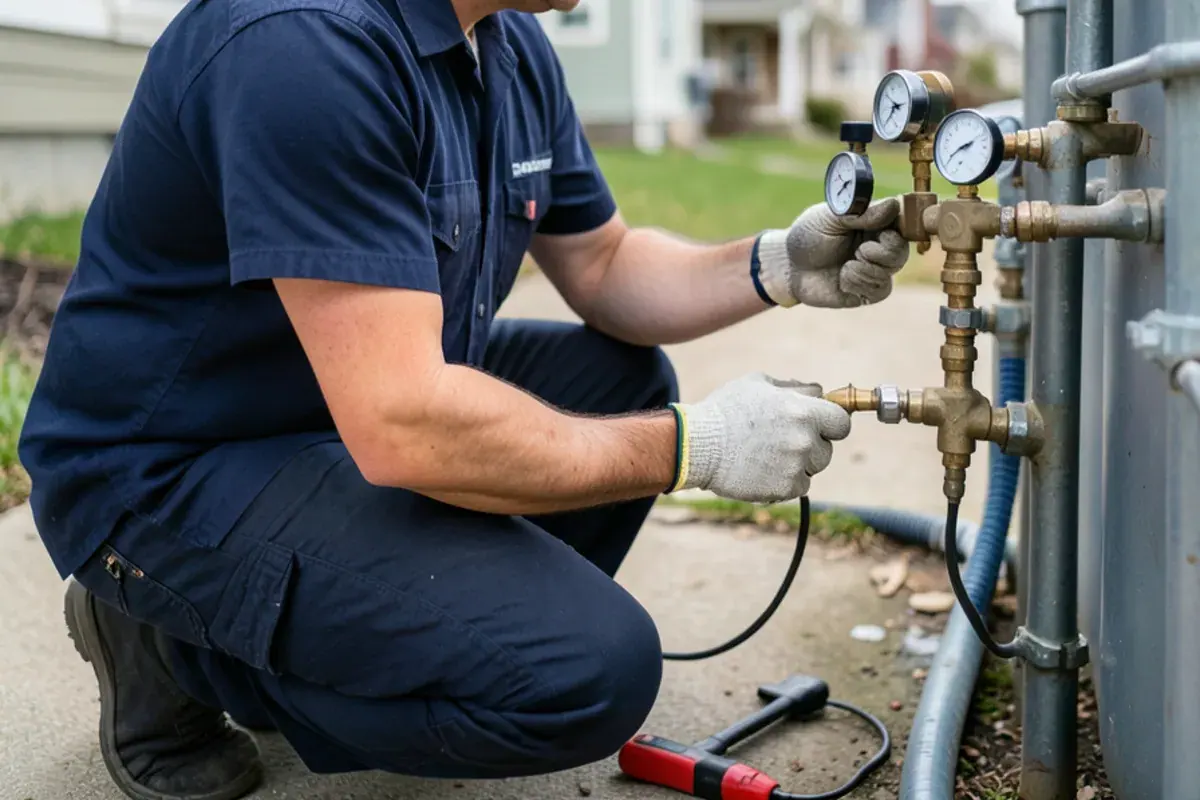
Technicians compare the temperature of the air going into the coil with the air coming out, a reading called the temperature split. You can take a rough version at home with a probe thermometer in the return and in a nearby supply duct after the system has run 15 minutes. A flat 20-degree rule is too simple, though. HVAC School's 2019 tech tip calls it misleading, because the drop depends on the temperature and moisture of the air entering the coil. Treat your number as a clue, not a verdict, and read it to the technician when you call. An infrared gun pointed at a register measures the metal, not the air.
What to tell the technician when you call
A clear description saves a trip and sharpens the diagnosis. Have these ready:
- Whether the indoor blower runs, and whether the outdoor fan and compressor run.
- Where any ice or frost is, and whether water dripped when it thawed.
- Whether a breaker tripped and how many times.
- Any hum, click, buzz or hiss, and when it starts.
- The system's age and when it was last serviced.
- Whether the warm air is constant or only on the hottest afternoons.
Repair or rethink: what usually follows each cause
| Cause | What usually follows | Question to ask |
|---|---|---|
| Thermostat or filter | A free or low-cost fix | Why was the filter so loaded? |
| Dirty coil or frozen coil | A cleaning, plus a search for why airflow dropped | What was blocking the airflow? |
| Capacitor or contactor | A parts repair, often the best-value fix on a sound unit | Can I see the old part? |
| Refrigerant leak | Leak found and repaired, then recharged | Where was the leak, and was it tested after? |
| Compressor failure | A repair-or-replace decision | How old is the system, and what is the quote against a new one? |
The age of the system tilts that last row. Contractor sources put air conditioners at 15 to 20 years with routine maintenance, and an older R-22 unit adds a wrinkle: R-22 production ended on January 1, 2020, so repairs depend on reclaimed supply. A quote for a new compressor on a unit near the end of that range deserves a replacement quote beside it. A capacitor on the same unit may still be worth fixing.
From the field: the part that was supposed to be replaced
One Google reviewer, Margaret S., wrote that an AC problem kept coming back after a prior person had supposedly replaced a capacitor and added refrigerant. When the reviewer had Kenan Corporation look, there was no new capacitor in the unit, and the fan blades were not moving because the motor was going out.
The lesson is general. Ask for the replaced part by name on the invoice, and have the tech show you the old one. A repair that does not stick deserves a second diagnosis, not a larger bill.
When should you stop and call for AC repair?
Call when the outdoor fan will not turn, the breaker trips twice, ice returns after a thaw or you hear a buzz from the outdoor unit. St. Louis logged 49 days at or above 90°F in 2025, according to the National Weather Service, and the units that quit are usually the ones that ran hardest.
Neighborhoods like Richmond Heights and Maplewood have many older homes where one failing part can hide behind several symptoms. Our AC repair page lays out how we diagnose before replacing parts. Call any hour, since we are open 24 hours. A same-day visit is possible if the schedule has room.
About the author
Kenan Perkins
Owner of Kenan Corporation. Studied at Ranken Technical College. The company, founded in 2010, is built on repairing systems honestly rather than pressuring people into new ones. More about us.
Sources
Why Is My AC Blowing Warm Air?: common questions
Why is my AC blowing warm air but the fan is running?
The blower and the cooling are separate jobs. The indoor fan can run while the outdoor compressor is off, tripped or failed, or while ice on the coil stops heat transfer. Check the thermostat and the outdoor unit. If the outdoor fan is still, look at the breaker, then call.
Is it safe to keep running an AC that blows warm air?
No. A frozen coil or a hot compressor can be damaged by hours of running. Switch the thermostat to Off, then set the fan to On for a few hours to thaw ice. If air is still warm after the unit has dried out, leave it off and book a diagnosis.
Can I add refrigerant myself when the AC blows warm air?
No. The EPA says only Section 608-certified technicians can buy and add refrigerant for home air conditioners. It also says to find and repair the leak instead of topping it off. A system that is low has leaked, so a recharge alone usually buys a few weeks.
Why does my AC only blow warm air on the hottest afternoons?
That pattern points to a unit that is losing the fight rather than one that has quit. Dirty condenser fins, a weak capacitor, low charge or an undersized system all show up first at 95 degrees. A tune-up before July catches most of these.
Talk to an HVAC specialist
Tell us what your system is doing and where you are. Open 24 hours.
Kenan Corporation, 927 Broadhead Lane, St. Louis, MO 63138. Open 24 hours.
- 4.6★ on Google29 reviews
- A+ BBB ratingNot BBB accredited
- Founded in 2010Repair-first advice
- Open 24 hoursCall any time